West Hollywood
West Hollywood in brief- City government in action this week
Women’s History Month; Getting Out the Vote; Strategic Plan Open House; Temp Closure of Sections of WeHo Park; plus more
City of West Hollywood Celebrates Women’s History Month in March
WEST HOLLYWOOD – The City of West Hollywood will celebrate National Women’s History Month in March with a series of events to recognize and honor women and women’s history.
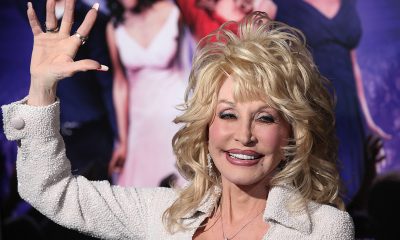
The City’s National Women’s History Month events will officially kick-off with the unveiling of two new women’s history month street pole banners honoring two notable women: transgender pioneer Marsha P. Johnson, one of the most prominent figures of the gay rights movement of the 1960s and 1970s and whose legacy continues to this day; and country music legend and actor Dolly Parton. The street pole banners presentation will take place at the regular meeting of the West Hollywood City Council on Monday, March 4, 2024 at 6 p.m. at the City of West Hollywood’s Council Chambers/Public Meeting Room, located at 625 N. San Vicente Boulevard, adjacent to the West Hollywood Library. Attendance is free; no RSVP is required. Limited validated parking will be available at the adjacent five-story structure. The City Council meeting broadcast will be available for viewing on the City’s website by visiting www.weho.org/wehotv or on the City’s WeHoTV YouTube channel at www.youtube.com/wehotv.
From Tuesday, March 5, 2024 through Friday, March 22, 2024, the globe lanterns above Santa Monica Boulevard will glow purple and gold. Throughout the month, a series of street pole banners that commemorate famous American women, civil rights leaders, and women’s rights activists will be on display along Santa Monica Boulevard. The City’s featured banners include: Gail Abarbanel; Maya Angelou; Ivy Bottini; Hillary Rodham Clinton; Midge Costanza; Marion Wright Edelman; Alicia Garza; Barbara Gittings; Dolores Huerta; Coretta Scott King; Wilma Mankiller; Michaela Mendelsohn; Patsy Mink; Zoe Nicholson; Connie Norman; Michelle Obama; Rosa Parks; Mary Pickford; Sonia Sotomayor; Nadia Sutton; Gloria Steinem; Elizabeth Taylor; Ruth Williams; Oprah Winfrey; among others. This year’s additions to the Women’s History Month banners are Marsha P. Johnson and Dolly Parton.
The City of West Hollywood and its Russian-Speaking Advisory Board will host a free program celebrating International Women’s Day on Sunday, March 3, 2024 from 12 p.m. to 3 p.m. at the Plummer Park Community Center, rooms 5 & 6, located at 7377 Santa Monica Boulevard. The celebration will feature music, food, dancing, and a fashion show. For additional information call (323) 848-6826 or email [email protected].
Supported by the City of West Hollywood, the first annual Sexual Healing/Sexual Health Ladies’ Brunch is a sex-positive and age-positive experience to learn more about women’s reproductive and mental health, menopause, and sexual pleasure. The brunch will be held on Sunday, March 3, 2024 from 11 a.m. to 2:30 p.m. at The Pleasure Chest and Hind Lounge located at 7733 Santa Monica Boulevard. This event is presented in partnership with The Pleasure Chest and Hind Bar and supported by the City of West Hollywood and its Women’s Advisory Board and the West Hollywood Chamber of Commerce. Tickets are $45 and available for purchase both online at https://www.eventbrite.com/e/sexual-healingsexual-healthtickets-823196401597 and at the door. For additional information email [email protected]
Also on Sunday, March 3, 2024 the City of West Hollywood and its Women’s Advisory Board will co-sponsor Guaranteed Abundance: Guaranteed Income Advocacy Training presented by LA Voice and the National Council of Jewish Women Los Angeles to be held from 10 a.m. to 11:30 a.m. at the West Hollywood Library Community Meeting Room located at 625 N. San Vicente Boulevard. Admission is free. To register visit bit.ly/GBIAdvocacy. For additional information email [email protected].
There will be a viewing party with artist Shaghayegh Cyrous to watch the moving image artwork, Xvarnah, on the digital billboard (Streamlined Arbor) at 9157 Sunset Boulevard on Sunday, March 3, 2024 from 1 p.m. to 2:30 p.m. Artwork airs every 20 minutes beginning at the top of the hour. Admission is free. This project is presented as part of the West Hollywood Moving Image Media Art Program (MIMA), an exhibition series administered by the City’s Arts Division, as part of its Art on the Outside program, and is presented with the City’s Sunset Arts and Advertising Program. Xvarnah will be on display through Thursday, May 30, 2024.
Women and Books is a book club that meets on the first Tuesday of each month to discuss books written by women authors. On Tuesday, March 5, 2024 from 7 p.m. to 8 p.m. the group will discuss The Paris Bookseller by Kerri Maher. Women and Books is co-sponsored by the City of West Hollywood through its Women’s Advisory Board and by West Hollywood Library. Admission is free. This is a hybrid event and will be hosted in-person at the West Hollywood Library’s Ruth Bader Ginsburg Room, located at 625 N. San Vicente Boulevard, as well as virtually on Zoom. To register, visit: https://lacountylibrary.webex.com/lacountylibrary/j.php?MTID=maa8a00d769f8b023cc81d2d603b7184c.
MashUp Contemporary Dance Company’s annual International Women’s Day Dance Festival will kick-off in West Hollywood on Friday, March 8, 2024 with the LA Women in Dance Summit in WeHo from 9 a.m. to 2 p.m. at Plummer Park’s Great Hall, located at 7377 Santa Monica Boulevard. The event will feature guest speakers, master classes and an Industry Expo. Tickets prices range from $20 to $65. To register and find out more about the entire festival, visit: https://www.mashupdance.com/tickets/international-womens-day-dance-festival. This project is supported in part by a grant from the City of West Hollywood.
The City of West Hollywood and its Women’s Advisory Board will co-sponsor the Annual Herstory Awards & Reception, which is presented by the Hollywood Chapter of the National Organization for Women (Hollywood NOW) to honor a woman who has made exceptional contributions to the community and embodies the spirit of feminism. This year’s honoree is Abbe Land, former West Hollywood Mayor and City Councilmember. The event will take place on Wednesday, March 13, 2024 at 7 p.m. at the West Hollywood Library Community Meeting Room, located at 625 N. San Vicente Boulevard. Admission is free. To RSVP, visit https://www.eventbrite.com/e/849689954527?aff=oddtdtcreator.
The City and its Women’s Advisory Board will host the Women’s History Month Party to honor the contributions of women and the more than 30 years of service of the City’s Women’s Advisory Board on Friday, March 15, 2024 from 7 p.m. to 10 p.m. at the West Hollywood City Council Chambers/Public Meeting Room and Auto Court, located at 625 N. San Vicente Boulevard. Admission is free, RSVP is requested by visiting www.weho.org/whm.
On Wednesday, March 27, 2024, from 6 p.m. to 8 p.m., the 27th Annual West Hollywood Women in Leadership Awards and Reception will take place at the Andaz West Hollywood, located at 8401 Sunset Boulevard. The event is co-sponsored by the City of West Hollywood and its Women’s Advisory Board along with the West Hollywood Chamber of Commerce. Admission is $25 and proceeds will benefit the Rape Treatment Center at UCLA Santa Monica Medical Center. To RSVP visit www.weho.org/whm.
A full schedule of City of West Hollywood events and meetings is available at www.weho.org/calendar.For more information about Women’s History Month in the City of West Hollywood, please contact Larissa Fooks, the City of West Hollywood’s Community Programs Coordinator, at (323) 848-6413 or at [email protected].
For people who are Deaf or hard of hearing, please call TTY (323) 848-6496.
City of West Hollywood’s Human Rights Speakers Series Presents a Free Screening & Panel Discussion of ‘Freedom on Fire: Ukraine’s Fight for Freedom’
To recognize the tenth anniversary of the war and the second anniversary of the full-scale invasion of Ukraine, the City of West Hollywood’s Human Rights Speakers Series will host a screening of the award-winning documentary film Freedom on Fire: Ukraine’s Fight for Freedom followed by a panel discussion featuring Emmy- and Oscar-nominated director/producer Evgeny Afineevsky and Anna Zaitseva, film protagonist, activist and survivor. Crafted from stark footage and exclusive interviews with people displaced by the enduring conflict, Freedom on Fire reveals how the spirit of unity strengthens morale even amid the country’s darkest hours.
The event will take place on Tuesday, March 19, 2024, at the City of West Hollywood’s Council Chambers/Public Meeting Room, located at 625 N. San Vicente Boulevard, adjacent to the West Hollywood Library. Doors will open at 6 p.m. and opening remarks will take place at 6:30 p.m., followed by the film screening and panel discussion. The event is free, but seating is limited. RSVP is required at http://go.weho.org/hrss.
The City of West Hollywood’s Human Rights Speakers Series brings together diverse communities to learn about and discuss global, national, and local human rights issues in a supportive environment. The series reflects the City’s commitment to human rights and core value of Respect and Support for People.
For additional information about the Human Rights Speakers Series, please visit www.weho.org/hrss.For more information, please contact Joy Tribble, the City of West Hollywood’s Arts Specialist, at (323) 848-6360 or at [email protected]. For people who are Deaf or hard of hearing, please call TTY (323) 848-6496.
2024 Public Safety Awards & Luncheon
The City of West Hollywood invites community members to attend the 2024 Public Safety Awards & Luncheon as the City celebrates and recognizes its organizational partners in public safety organizations that have made significant efforts towards enhancing community safety in West Hollywood.
The Public Safety Awards & Luncheon will take place on Wednesday, March 6, 2024, at 11:30 a.m. at the City of West Hollywood’s Council Chambers/Public Meeting Room, located at 625 N. San Vicente Boulevard. Lunch will be served in the Auto Court area outside the Chambers followed by the awards presentation inside. Admission is free; no RSVP is required. Parking will be available in the adjacent five-story structure, accessible from the El Tovar Place entrance off N. Robertson Boulevard.
This year, the Public Safety Awards will be presented to members of the Los Angeles County Sheriff’s Department West Hollywood Station, Los Angeles County Fire Department Stations 7 and 8, and to West Hollywood Block by Block Security Ambassadors.
These award recipients have made extraordinary efforts in public safety programs and events, strengthened community partnerships; and have demonstrated leadership in multiple ways that have contributed to a safer community.For more information about the City’s Public Safety Awards & Luncheon, please contact Anita Shandi, the City of West Hollywood’s Public Safety Manager, at [email protected] or at (323) 848-6446. For people who are Deaf or hard of hearing, please call TTY (323) 848-6496.
Temporary Closure of Sections of West Hollywood Park will Take Place in February/March to Accommodate Special Event
From Wednesday, February 28, 2024, to Thursday, March 14, 2024, there will be a temporary closure of certain sections of West Hollywood Park, located at 647 N. San Vicente Boulevard – including the small dog park and basketball courts – to accommodate the annual Elton John AIDS Foundation Academy Awards Viewing Party and fundraiser.
Additionally, there will be intermittent lane closures on N. San Vicente Boulevard, one full street closure, and impacts to certain West Hollywood Park facilities, as follows:
Intermittent lane closures will occur on Southbound N. San Vicente Boulevard between Santa Monica Boulevard and PDC Drive on the following dates:
- Friday, March 1, 2024 – Southbound N. San Vicente Boulevard #1 & #2 lanes will be closed from 5 a.m. to 10 a.m.;
- Saturday, March 2, 2024 – Southbound N. San Vicente Boulevard #1 & #2 lanes will be closed from 6 a.m. to 11 a.m.;
- Monday, March 4, 2024, through Thursday, March 7, 2024 (Daily) – Southbound N. San Vicente Boulevard #2 lane will be closed from 8 a.m. to 5 p.m.;
- Friday, March 8, 2024, through March 10, 2024 – Southbound N. San Vicente Boulevard #2 lane will be closed from 6:30 a.m. to 12 p.m.;
- Monday, March 11, 2024 – Southbound N. San Vicente Boulevard #2 lane will be closed from 5 a.m. to 10 p.m.; and Southbound N. San Vicente Boulevard #1 lane will be closed from 6 p.m. to 10 p.m.;
- Tuesday, March 12, 2024 – Southbound N. San Vicente Boulevard #1 & and #2 lanes will be closed from 6 p.m. to 10 p.m.
A full street closure will occur on Northbound and Southbound N. San Vicente Boulevard between Santa Monica Boulevard and Melrose Avenue starting on Sunday, March 10, 2024, at 12 p.m.; the street will reopen on Monday, March 11, 2024, at 5 a.m.
West Hollywood Park facilities impacts/closures will occur as follows:
- West Hollywood Park small dog park and basketball courts will be closed from Wednesday, February 28, 2024, through Wednesday, March 13, 2024; and
- West Hollywood Park large dog park will be closed from Friday, March 8, 2024, through Monday, March 11, 2024;
- West Hollywood Park Five-Story Parking Structure will be closed all day on Sunday, March 10, 2024; the structure will reopen on Monday, March 11, 2024, at 5 a.m.
The City of West Hollywood has proudly supported the work of the Elton John AIDS Foundation and its Academy Awards Viewing Party over many years. This year marks the 32nd anniversary of the Elton John AIDS Foundation.For inquiries related to the City of West Hollywood and temporary impacts on West Hollywood Park, please contact the City of West Hollywood’s Event Services Division at [email protected]. For people who are Deaf or hard of hearing, please call TTY (323) 848-6496.
West Hollywood Invites Community Members to Participate in Upcoming ‘WeHo 40’ Strategic Plan Open House
The City of West Hollywood will host a community open house to kick off the development of West Hollywood’s next citywide strategic plan, WeHo 40. This free event will include a brief program, food, and live entertainment. It will take place on Saturday, March 2, 2024 from 11 a.m. to 2 p.m. at Kings Road Park, located at 1000 N. Kings Road. Community members are encouraged to stop by at any point during the event to learn more about the project, to provide feedback, and to connect with fellow community members. Translation services will be available in Spanish and Russian. Advance RSVP is not required.
This community open house will be the first in a series of community feedback-gathering events, which are central to developing WeHo 40. This event will focus on visioning and goal setting, including the identification of potential goals and priorities. Attendees will have the opportunity to contribute their experiences, ideas, and insightful perspectives to support the development of the strategic plan. The program will include a brief presentation followed by small group discussions and exercises. These activities will be repeated several times over the course of the open house; participants are encouraged to drop in at any time to participate.
WeHo 40 is the City of West Hollywood’s forward-looking strategic planning process. Rooted in 40 years of municipal history – and looking ahead toward 2040 – WeHo 40 will engage residents, community members, and local businesses in setting priorities to create an inclusive and equitable roadmap for the City’s future and build upon the successes of the City’s past strategic plans.
For nearly four decades, the City of West Hollywood has been engaging in the collaborative development of strategic plans in order to shape forward-thinking policies and priorities. The City developed its first strategic plan in 1990. In 2003, the City launched its second strategic plan, Vision 2020. The development of Vision 2020 included the participation of more than 250 community members and helped shape the City’s Mission Statement and Core Values.
Visit engage.weho.org/wehostrategicplan to learn about the latest WeHo 40 updates and sign up for project-specific announcements. For more information, please contact Paolo Kespradit, City of West Hollywood Management Analyst, at (323) 848-6460 or [email protected]. For people who are Deaf or hard of hearing, please call TTY (323) 848-6496.
City of West Hollywood is Getting Out the Vote: Presidential Primary Election Voters May Vote In-Person, Vote by Mail, or Use Ballot Drop-Off Boxes through 8 p.m. on March 5, 2024
As part of the City of West Hollywood’s continuous efforts to increase voter participation, the City reminds community members that each vote counts and your voice matters in the upcoming Presidential Primary Election.
Key Dates for the March 5, 2024 Presidential Primary Election:
- February 1: Vote by Mail begins & Drop Boxes Open
- February 20: Last Day to Register to Vote & Receive a Vote by Mail Ballot
- February 24: Same-Day Registration and 11-Day Vote Centers Open (City of West Hollywood Plummer Park Vote Center, located in Fiesta Hall, 7377 Santa Monica Boulevard)
- March 2: 4-Day Vote Centers Open (City of West Hollywood West Hollywood Park Vote Center, located in the Aquatic and Recreation Center San Vicente/La Cienega Rooms)
- March 5: Election Day
The State of California allows for conditional day-of registration and allows that voter to cast a provisional ballot. Vote by Mail postal mail-in and ballot-drop-off voting for registered voters began on February 1, 2024. Many LA County Vote Centers will begin operating on February 24, 2024; there will be two City of West Hollywood Vote Centers (Plummer Park opens on February 24 and West Hollywood park opens on March 2).
Vote Centers are open every day from 10 a.m. to 7 p.m. during the pre-Election Day voting period. On Election Day, Tuesday, March 5, 2024, Vote Centers will be open from 7 a.m. to 8 p.m. For all LA County Vote Center locations and estimated wait times, visit https://locator.lavote.gov/locations/vc.
The City of West Hollywood provides two free options for residents who need transportation assistance to vote in person at a Vote Center. Cityline makes regular stops at or within a short distance of voting locations. For a route and schedule, visit www.weho.org/cityline. Dial-a-Ride is a rideshare service for West Hollywood residents over 62 or who are living with a disability (of any age) available between 7:30 a.m. and 5 p.m. Monday through Friday by reservation. Advance registration is required; to register, call toll-free (800) 447-2189.
In addition to postal Vote by Mail and in-person voting at Vote Centers for the March 5, 2024 Presidential Primary Election, the City of West Hollywood has worked with LA County to establish three Ballot Drop Box locations in West Hollywood. These Ballot Drop Boxes are bright yellow and clearly marked. They feature safety and security features, such as 24-hour electronic monitoring. Locations are as follows:
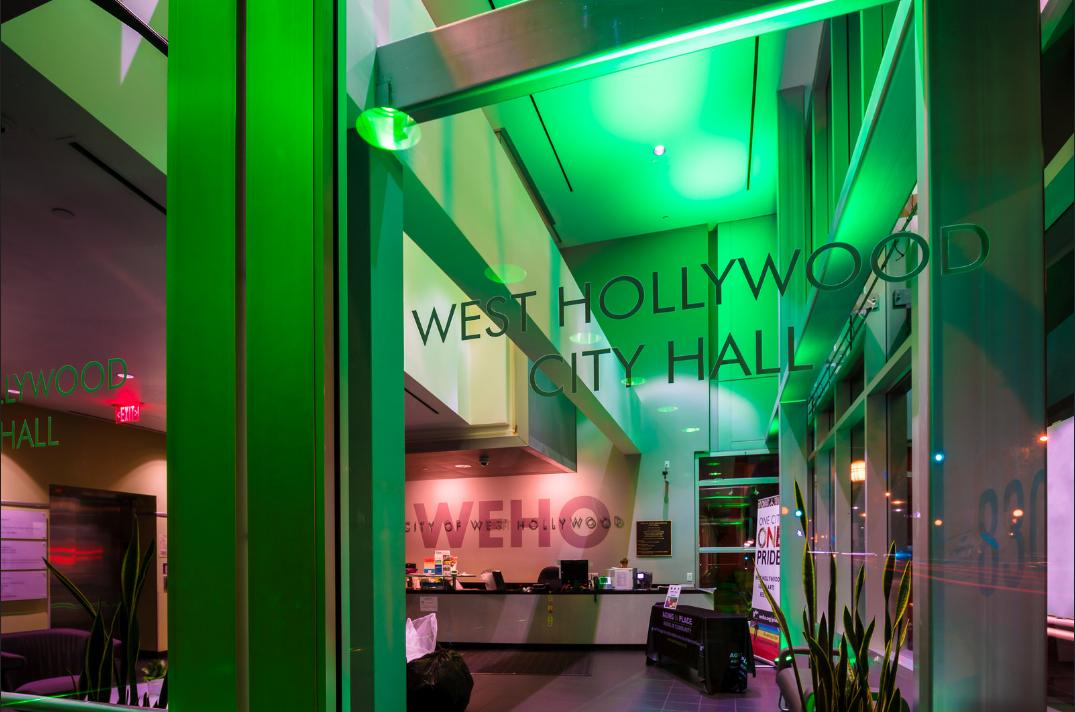
- West Hollywood City Hall, located at 8300 Santa Monica Boulevard
(Ballot Drop Box located behind City Hall, off of N. Sweetzer Avenue)
- West Hollywood Library, located at 625 N. San Vicente Boulevard
(Ballot Drop Box located on the west side of the street, in front of the library)
- Plummer Park, located at 7377 Santa Monica Boulevard
(Ballot Drop Box located in front of the Plummer Park Community Center)
The City of West Hollywood encourages every eligible voter to have a vote plan with the following tips:
- Check your voter registration status or register to vote at www.lavote.gov/vrstatus or call (800) 815-2666;
- Decide how you would like to vote: Fill in your ballot and drop off a ballot at a Ballot Drop Box or a Vote Center; or, Vote in-person at a Vote Center;
- Educate yourself about the issues and then vote as soon as you receive your ballot;
- Encourage your friends, family, and neighbors to vote or register to vote;
- Assist those who need help with their mail-in ballot or offer to take a homebound senior to a Vote Center; and
- Track your ballot. You can sign-up to receive personalized text messages, emails, and/or automated voice messages on your Vote-by-Mail ballot (whether sent by mail or dropped off at a Ballot Drop Box or Vote Center) by subscribing to Where’s My Ballot. This is a free service available to all registered voters that provides updated information about where your ballot is and when you can expect to receive it. Sign up to be notified of the status of your ballot at california.ballottrax.net/voter.
City of West Hollywood voters receive complete ballot information by mail directly from the LA County Registrar-Recorder. More election information is available at www.weho.org/elections.
***************************************************************************************
For up-to-date information about City of West Hollywood news and events, follow @wehocity on social media, sign-up for news updates at www.weho.org/email, and visit the City’s calendar of meetings and events at www.weho.org/calendar. West Hollywood City Hall is open for walk-in services at public counters or by appointment by visiting www.weho.org/appointments. City Hall services are accessible by phone at (323) 848-6400 and via website at www.weho.org. Receive text updates by texting “WeHo” to (323) 848-5000.


West Hollywood
We asked WeHo City Council candidates your most pressing questions
See what City Council candidates have to say about the most important issues this election cycle
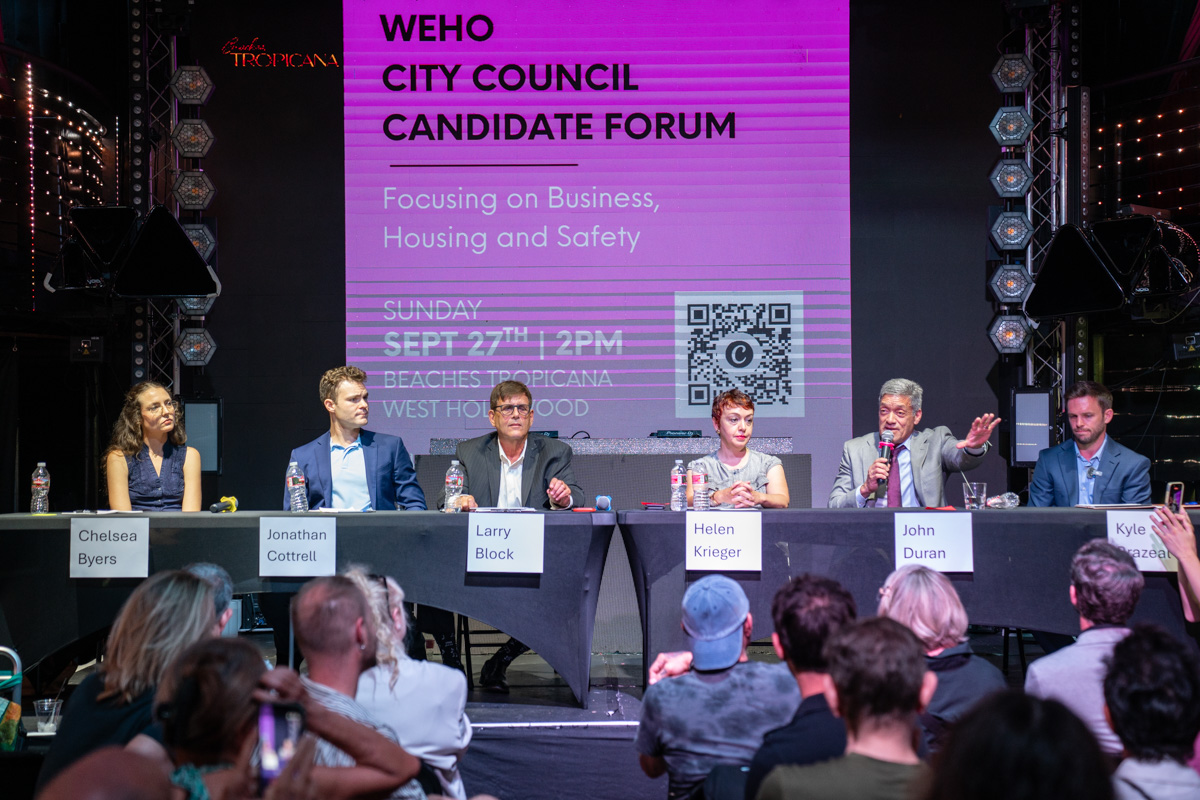
West Hollywood voters will soon be heading to the polls to elect 3 of its 5 city council members. A whopping 14 candidates are running for the open seats, and the elected 3 will go on to address issues like housing development, Flock camera contracts, and managing the city’s high cost of living. With so many candidates, keeping track of everyone’s views on policy is no easy task. So, the Los Angeles Blade sent a questionnaire to every candidate running for city council that addressed the most important issues of this election cycle.
Out of the 14 candidates, 12 responded to our questionnaire in time for publication. Tom Demille and Tatyana “Tanya” Tsikanovsky did not respond in time for publication.
Candidate profiles are listed in the order the candidates will appear on the ballot.
Candidate Profiles:
Helen Krieger
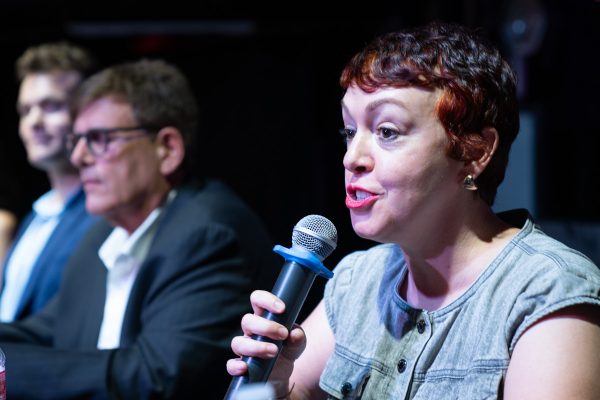
Has lived in West Hollywood for 10 years.
Occupation: Screenwriter and housing advocate
Endorsements: LA County Democratic Party, Equality CA, Stonewall Democratic Club, Firefighters Local 1014, LA Federation of Labor, Streets for All, California Working Families Party, Lindsey P. Horvath, Abbe Land, John Erickson and more
Other candidates Helen will vote for: Chelsea Byers
Policy
Do you support renewing West Hollywood’s contract with Flock Safety? No.
“We need to end the contract and physically take down the cameras. They’re a huge invasion of privacy.”
Do you support a bike lane or sidewalk extension on Fountain Avenue? Yes.
“I support widening the sidewalks to make them ADA accessible, and I support building a bike lane as part of that project to finally connect the Eastside to our micromobility infrastructure.”
Do you support creating a TODAP (Transit Oriented Development Alternative Plan) for West Hollywood? Maybe.
“I’m supportive of creating our own plan as long as it practically allows for at least as much housing as SB-79, and I would want SB-79 to remain in place until that TODAP is agreed upon, voted on, and approved by SCAG.”
Do you support renewing West Hollywood’s contract with Allied Universal to continue running the security ambassador program? No.
“Allied Universal is an ongoing vendor for ICE, and WeHo has a policy of not working with ICE vendors. But I like the ambassador program in general.”
Do you support a vacancy tax on empty storefront properties? No.
“In most commercial leases the tenant has to pay the taxes, so this would just make rent more unaffordable for small businesses. I do understand where the desire for a vacancy tax comes from – we want all our storefronts to be busy and activated – but this is the wrong answer.”
Do you support adding more digital billboards to Sunset Boulevard? Yes.
“I’m in favor of converting some existing static billboards on Sunset to digital billboards in a thoughtful way. And I would support adding more digital billboards, while being careful of oversaturation. These pay for many city services, and they also can pay for pedestrian improvements that we need on Sunset.”
Why are you running for City Council?
“I’m running because I love West Hollywood – I love how walkable it is, I love our parks, I love how gay it is. But the cost of living has continued to go up, and now, with average asking rents over $4000 for a one-bedroom and $6000 for a two-bedroom, we’re in danger of losing what makes us special. I’m running to create more housing, including affordable housing, safer streets, and thriving local businesses.”
What are your policy priorities?
“Housing is my biggest priority. West Hollywood (like much of the country) hasn’t been building enough housing, so demand has built up. In the 40 years since we became a city, we’ve built 70 percent fewer homes than the 40 years before we were a city, even as the population of the US has gone up 50 percent. We need to once again be the city that’s not afraid to build housing while also protecting existing tenants and strengthening tenants’ rights. Safe streets — WeHo has inherited a lot of bad street designs from the 60s when we were unincorporated LA County. I want to focus on designing complete streets with multimodal transportation options and ADA accessible sidewalks. Thriving local businesses — our businesses are part of what makes us so unique, so I want to unleash our creative entrepreneurship by streamlining the permitting process. One easy way we can do this – make it easier to film in WeHo. We’re currently the hardest city in all of LA County for film and TV production, which means we’re missing out on the tens of millions of dollars and hundreds of union jobs.”
How will you address the high cost of living in West Hollywood?
“I believe the main reason for the high cost of living in West Hollywood is housing. This is most people’s biggest cost, and about 20 percent of renters pay half their income just on rent alone. By building more housing, we can ease this burden on people’s wallets. We need to build more housing of all types – market-rate housing with affordable or rent-stabilized set-asides, 100 percent affordable housing, and also “missing middle” housing for people who make too much to qualify for affordable housing, but not enough to afford market rates.”
Kody Christiansen
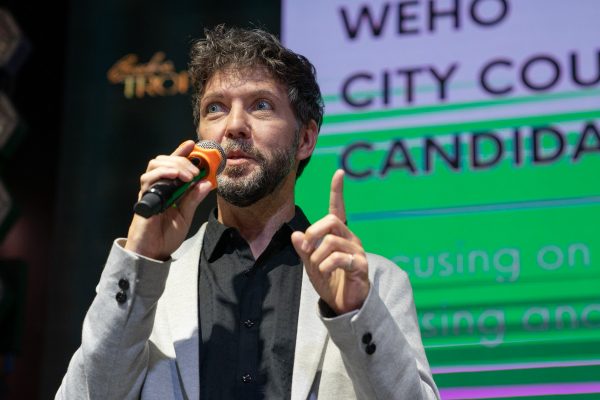
Has lived in West Hollywood for 21 years.
Occupation: Sales associate at an LGBTQIA+ owned small business, author, and actor
Endorsements: The Bayou, Greenwich Pizzeria, Karina’s Cleaners, Mail Service Center, Joshua Baum, and Cosmo: the Queen of Melrose
Other candidates Kody will vote for: Declined to answer
Policy
Do you support renewing West Hollywood’s contract with Flock Safety? Maybe.
“I would consider a pause until we have clear reports on how our own sheriff’s deputies have used the system, and would consider renewal only with strict, ongoing oversight, verifiable privacy protections, and immediate reporting of outside access requests. If safeguards fail, the agreement is violated even once, or our data is used to support federal immigration enforcement, I would support ending the contract immediately.”
Do you support a bike lane or sidewalk extension on Fountain Avenue? Yes, sidewalks.
“I support wider, ADA-compliant sidewalks and immediate safety improvements on Fountain, including better lighting, safer crossings, and traffic calming, but I oppose the current bike lane plan that removes parking and traffic lanes. Accessibility should come first, and we need to think bigger than ‘this plan or nothing,’ including bike lanes on corridors like Santa Monica Boulevard that connect people to the places they want to go.”
Do you support creating a TODAP (Transit Oriented Development Alternative Plan) for West Hollywood? Yes.
“Yes, I strongly support a TODAP that allows us to plan for housing while protecting existing renters and historic neighborhoods and directing growth toward appropriate commercial corridors. I call my approach SIMBY BWAP: ‘Sure In My Backyard, But With A Plan.’”
Do you support renewing West Hollywood’s contract with Allied Universal to continue running the security ambassador program? Maybe.
“Before supporting renewal, I would review other providers and compare their training, capabilities, cost, and results. Residents deserve a program equipped to provide meaningful assistance beyond simply making calls, with clear responsibilities and effective coordination with our sheriff’s deputies.”
Do you support a vacancy tax on empty storefront properties? Maybe.
“My first approach would be incentives and direct relationships with building owners to connect vacant spaces with businesses, temporary uses, and community activity. But I would not rule out a carefully targeted vacancy tax for larger property owners who leave storefronts empty for years while our neighborhoods bear the consequences.”
Do you support adding more digital billboards to Sunset Boulevard? No.
“The Sunset Strip has a character worth protecting, and adding more digital billboards is not the direction I want for our city.”
Why are you running for City Council?
“West Hollywood gave me the freedom to find myself when I moved here in 2005. I’m running because I want that same promise of belonging to remain possible for others. My journey has taken me from experiencing homelessness on the Sunset Strip to earning degrees from NYU, Harvard, and Cambridge, and now studying public administration at USC (which I consider job training for the seat I intend to take on our next council). As an East Side renter, small business employee, and someone who has both needed help and helped others, I bring lived experience and policy training to decisions that affect real lives. I want residents to feel heard at City Hall, and I’ll back that up with weekly office hours, independent judgment, and a commitment to serving the full four years.”
What are your policy priorities?
“My priorities are housing people can afford, practical solutions to homelessness, safe and accessible streets, thriving small businesses, and a City Hall that listens. Having experienced homelessness and later worked at the Harvard Square Homeless Shelter as a student volunteer, I am uniquely qualified to help connect people with housing and the mental health care, recovery support, identification, and ongoing services they need. My proposals include a locally designed housing plan, a legacy business program, a West Hollywood animal shelter, and a community ideas fund that gives neighborhoods a direct say in public spending. I also support responsible sheriff staffing, accessible sidewalks, and accountability for every public dollar, because compassion and a safe, well-run city belong together.”
How will you address the high cost of living in West Hollywood?
“I live in a rent-stabilized apartment and work in a small business, so affordability is personal to me. [If elected,] I would defend rent-stabilized housing and tenant protections while supporting more affordable housing along appropriate commercial corridors through a thoughtful, locally designed plan. Through my proposed legacy business program and efforts to bring vacant storefronts back to life, I would help strengthen neighborhood businesses that provide jobs and everyday services. We need to support workers and small businesses together, with decisions grounded in current information and an honest understanding of what it costs to live and work here.”
Jonathan Cottrell
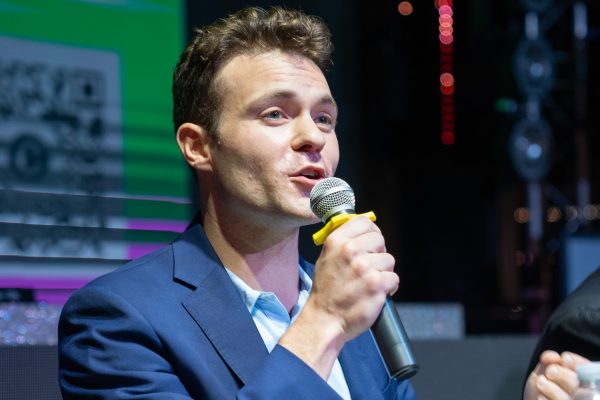
Has lived in West Hollywood for 7 years.
Occupation: Owner of GYM Bar WeHo, software engineer at ESPN
Endorsements: Los Angeles County Democratic Party, John Heilman, Danny Hang, Ben Allen, Rick Chavez Zbur, Nikki Perez, Freddy Puza, Jeff Prang, Teamsters Joint Council 42, Laborers Local 300, and more
Other candidates Jonathan will vote for: Declined to answer
Policy
Do you support renewing West Hollywood’s contract with Flock Safety? No.
“No.”
Do you support a bike lane or sidewalk extension on Fountain Avenue? Yes.
“Phase 1 is already approved. My commitment for Phase 2 is to follow the Plummer Park revisioning model where we brought meaningful community input to the table and made sure the process is transparent, with a competitive bid process, and brings the best minds towards solving the issues our community is facing.”
Do you support creating a TODAP (Transit Oriented Development Alternative Plan) for West Hollywood? Yes.
“The housing is coming either way under state law, and I’d rather West Hollywood target building where the infrastructure can already support it on day one. As an engineer by trade, I believe smart planning is how we get to more housing that meets the need faster. This is not about slowing it down, but coordinating and planning the rollout.”
Do you support renewing West Hollywood’s contract with Allied Universal to continue running the security ambassador program? Yes.
“I would support renewing it. However, I would like to see more training and more coordination among the different safety and human services agencies that we have. We need to make sure the community is not confused about who to call, and that service and response times are unaffected. We must increase our investment in our sheriff’s station as well.”
Do you support a vacancy tax on empty storefront properties? No.
“Vacant storefronts are a common issue I’m hearing from community members. However, I caution us to make sure we understand the root causes before enacting any sort of penalty. For example: we are seeing commercial property rates fall in many areas, and certain property owners giving 2 years free to tenants. I believe a vacancy tax would not solve the issue we are facing with commercial storefronts. We need to tackle the actual problems that are making it tough to do business in West Hollywood. ”
Do you support adding more digital billboards to Sunset Boulevard? Maybe.
“When contemplating any expansion to our digital billboards program, we must absolutely do the homework of getting community input and impact studies, particularly for those impacted directly by the billboards. Without specific details of plans and impact studies, I do not feel it would be responsible to comment.”
Why are you running for City Council?
“When I first came to West Hollywood, I was 24 years old, and I instantly felt that I was home. I found love here, built a life here, and now my husband Erik and I are raising our newborn son, Matheo, in the city we love (although he unfortunately can’t vote for his dad yet). I own and operate GYM Bar, a sports bar and community gathering spot where people walk in alone and find their community, which is exactly what this city did for me. With two pioneers retiring from the City Council, our city is at a major inflection point, and I’m running to preserve what we love about West Hollywood, work on the problems we have, and position our city for the future. I’m a software engineer by trade, so I love big ideas, and I take big swings at finding solutions, and I believe we should be bold about where we’re going while being thoughtful and strategic about how we get there.”
What are your policy priorities?
“Community safety: we should measure safety by whether residents actually feel it, which means trained personnel where they’re needed most, permanent night shifts, making the entertainment policing team permanent, and real coordination between deputies, security ambassadors, businesses, and residents. Housing and affordability: strengthen rent stabilization and tenant protections, expand quality affordable housing where the infrastructure can support it, and distinguish neighborhood property owners from the corporations and outside speculators pushing longtime residents out. Economic opportunity: City Hall should treat entrepreneurs and local businesses as partners, not case numbers, with streamlined permits, a one-stop business concierge, and amazing public service. Public office is a public trust: present a budget residents can understand, and measure the results of public programs, not simply how much money was spent.”
How will you address the high cost of living in West Hollywood?
“We have to address the cost of living from multiple directions: rent, groceries, transportation, and basic services. I support stronger rent stabilization via lowering rent increase caps, protections for seniors and disabled tenants, building public and community-owned housing, and using every available tool to create more permanently affordable homes. We should also support small businesses and local workers, reduce transportation costs by investing in walking, biking, and transit, and use the City’s purchasing power and policy tools to help make everyday necessities more affordable, like a publicly subsidized grocery store. The goal should be an affordable West Hollywood where people who work here can actually afford to live here.”
Stephen Post
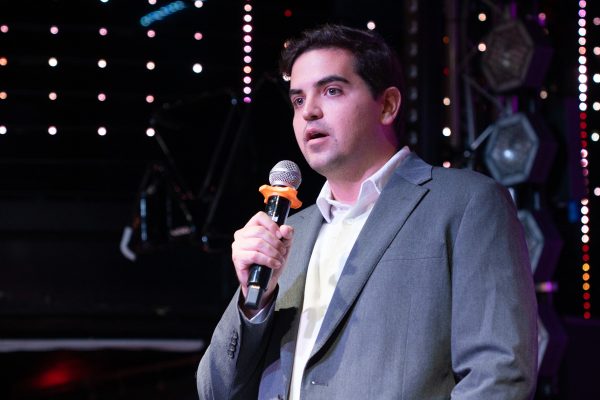
Has lived in West Hollywood for 5 years.
Occupation: Nonprofit leader and business improvement district manager
Endorsements: Stonewall Democratic Club, Democratic Socialists of America-Los Angeles, Los Angeles County Young Democrats, Sunrise Movement LA, Streets for All, Bubba Fish, Kenneth Mejia, Eunisses Hernandez, UNITE HERE! Local 11, Los Angeles County Public Defenders Union Local 148, and more
Other candidates Stephen will vote for: Chelsea Byers, Helen Krieger
Policy
Do you support renewing West Hollywood’s contract with Flock Safety? No.
“I would end the Flock contract as soon as legally and practically possible and would not allow the current pilot to be renewed for any surveillance technology including the drone and real time watch cameras. Public safety should be proactive and care-first, not built around a digital, reactive surveillance system that can disproportionately impact immigrants, LGBTQ+ people, and other vulnerable communities.”
Do you support a bike lane or sidewalk extension on Fountain Avenue? Yes.
“I support completing the Fountain Avenue safety improvements, including protected space for cyclists and wider, ADA-accessible sidewalks, while making sure the project is designed around the needs of residents and the surrounding community. Streets For All specifically endorsed my campaign in part because of my support for safe, multimodal improvements on Fountain and my experience managing community engagement similar public street safety projects.”
Do you support creating a TODAP (Transit Oriented Development Alternative Plan) for West Hollywood? No.
“I do not support creating a TODAP that would allow transit-oriented development to become a backdoor for slowing housing production, weakening West Hollywood’s tenant protections, or subverting local planning priorities already laid out through our Zoning Improvement Program (ZIP). We should build more housing, especially affordable and public housing, while using state housing tools strategically and preserving strong renters’ rights.”
Do you support renewing West Hollywood’s contract with Allied Universal to continue running the security ambassador program? No.
“Similar to Flock, I would want to end the contract sooner rather than renew it, particularly given Allied Universal’s ownership of G4S and ongoing contracts with ICE and DHS for services including the electronic monitoring of people in immigration enforcement proceedings. I support the security ambassador program under a different vendor, but West Hollywood should not be financially supporting a security company that profits from immigration enforcement and surveillance.”
Do you support a vacancy tax on empty storefront properties? Yes.
“As a business improvement district manager, I know long-term vacant storefronts hurt our commercial corridors and can make neighborhoods feel less safe and less vibrant. I support exploring a vacancy tax or similar policy that creates an incentive for property owners to put empty commercial spaces back into productive use, rather than use them as tax write-offs.”
Do you support adding more digital billboards to Sunset Boulevard? Yes.
“There is already a vibrant streetscape that the billboards have created. These projects would be evaluated on a case-by-case basis, and I would approve projects where there is a clear public benefit to West Hollywood. Any proposal should preserve the character and safety of Sunset Boulevard and deliver meaningful funding resources.”
Why are you running for City Council?
“I’m a renter, nonprofit advocate, and business improvement district manager who has spent my career bringing people together to advance justice and strengthen communities. As Vice Chair of the Public Safety Commission, and through my prior work helping craft the WeHo 2040 Strategic Plan, I have dedicated myself to listening to local residents to guide the next fifteen years of our city’s future. I’m running because I believe West Hollywood should continue setting the standard for what bold, progressive local government can accomplish. WeHo can’t wait for stronger renter protections, more affordable housing, safer and cleaner streets, and a City Hall that is transparent, accountable, and responsive to residents. Our city was built by LGBTQ+ and tenants’ rights advocates who fought to be heard, refused to remain invisible, and I’m ready to build on that legacy and fight for a West Hollywood where everyone can thrive.”
What are your policy priorities?
“My top priorities center on keeping West Hollywood affordable, establishing a care-first and proactive approach to public safety, and fostering a transparent, accountable local government. I would work toward capping rent increases so renters are closer to spending 30% of their income on housing by 2030, advocate for stronger tenant protections, and to help residents thrive without being overburdened by everyday costs of living. To ensure safety, we must fully fund human services, expand emergency mental health response systems, and focus on homelessness and violence prevention rather than depending on reactive Flock and drone surveillance. Lastly, I will bring deep community engagement and participatory budgeting to City Hall, empowering neighbors to directly influence how municipal resources serve our community. It is time we bring the next generation of leadership to WeHo.”
How will you address the high cost of living in West Hollywood?
“West Hollywood cannot remain a place where people who work here are unable to afford living here. I would strengthen tenant protections and expand affordable and community-owned housing to prevent displacement. We also need to address the other costs that make it harder to live here by supporting local workers and small businesses, expanding transit and safer alternatives to driving, and investing in human services that address the root causes of safety and housing instability. I would also pursue new affordable housing funding and partnerships with nonprofit housing providers while making sure new development prioritizes affordability rather than simply increasing property values. Ultimately, making WeHo more affordable means building a city where renters, working people, seniors, immigrants, and LGBTQ+ residents can afford not just to visit or work here, but to stay.”
Joel Zaldivar
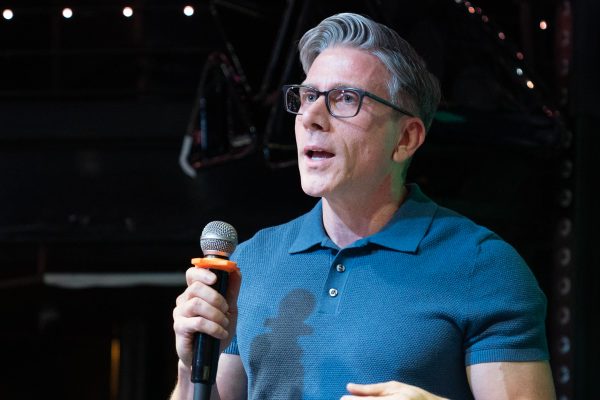
Has lived in West Hollywood for 11 years.
Occupation: Owner of OPVS
Endorsements: Rogerio Carvalheiro (West Hollywood Planning Commissioner)
Other candidates Joel will vote for: Declined to answer
Policy
Do you support renewing West Hollywood’s contract with Flock Safety? No.
“I do not support renewing the contract due to safety and privacy concerns from the community.”
Do you support a bike lane or sidewalk extension on Fountain Avenue? No.
“I do not support the Fountain Ave project as currently proposed.”
Do you support creating a TODAP (Transit Oriented Development Alternative Plan) for West Hollywood? Yes.
“I am 100% in favor of the city taking charge and creating its own TODAP.”
Do you support renewing West Hollywood’s contract with Allied Universal to continue running the security ambassador program? No.
“I do not support renewing West Hollywood’s contract with Allied Universal due to their inconsistent security measures. I would seek a new provider that meets the demands of our city. To be clear, I would only not renew them upon having secured another provider, as we are currently not permitted to increase our Sheriff’s in West Hollywood due to an LA County hiring freeze.”
Do you support a vacancy tax on empty storefront properties? Yes.
“I support a vacancy tax on storefront properties only if it’s tied through the business licensing division. Otherwise, the tax will be passed on from the building owner to the tenant, bypassing its original intent to place added pressure on Landlords to lease their properties below their asking.”
Do you support adding more digital billboards to Sunset Boulevard? Maybe.
“I would only support this measure if a majority of residents within a specificized distance of its placement, agreed to the measure.”
Why are you running for City Council?
“In addition to being a resident, I’m also a father and small business owner here in the city. I am heavily invested in our community and in its long-term success. We need a Council Member who is above bickering and grandstanding and ready to take matters into their hands and get things done, one policy initiative at a time.”
What are your policy priorities?
“I support overhauling the business task force to help small business owners negotiate as well and renew existing leases that don’t financially imperialize their business model and force them to raise prices on WeHo residents. We should revamp our parking department to work for residents instead of finding ways to penalize and tax them. Finally, City Hall, should triple down on safety for our residents, our communities and our city guests. We cannot grow as a city unless people feel safe to put down their roots here.”
How will you address the high cost of living in West Hollywood?
“By tasking our newly overhauled business department to “act as a developer” and intentionally seek out business opportunities that we, as a city, can leverage and entice developers to build affordable housing for our city. We need to be a proactive player in how, when, and where housing is built.”
Kevin Ligon
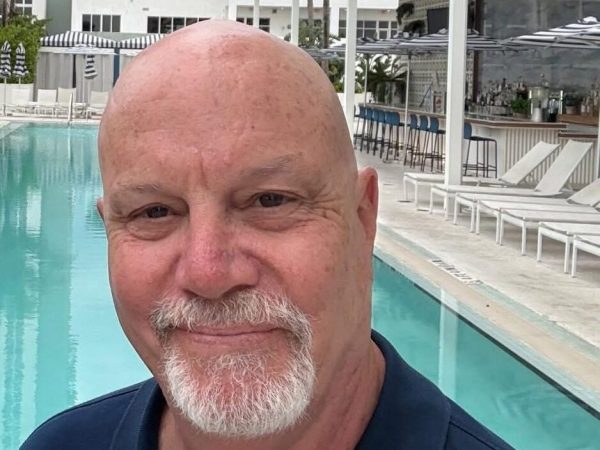
Has lived in West Hollywood for 16 years.
Occupation: Retired civil servant at the Veterans Health Administration
Endorsements: N/A
Other candidates Kevin will vote for: Declined to answer
Policy
Do you support renewing West Hollywood’s contract with Flock Safety? No.
“Currently, I’m not in support of renewing the flock safety contract in its current state. There are too many issues with the system. I believe that West Hollywood citizens and their privacy take priority.”
Do you support a bike lane or sidewalk extension on Fountain Avenue? Yes, sidewalks.
“Fountain Avenue needs wider sidewalks for safety reasons. I believe there are also alternatives to the approved plan that would be safer for all concerned. A review of systems from other cities where safety and traffic have found better solutions is in order.”
Do you support creating a TODAP (Transit Oriented Development Alternative Plan) for West Hollywood? Yes.
“Yes, I would support a TODAP for West Hollywood.”
Do you support renewing West Hollywood’s contract with Allied Universal to continue running the security ambassador program? Maybe.
“The Allied universal contract has only been in place since August 25, 2025. I find that they have been much more attentive to our homeless population and our citizens than the previous contract. I’m not aware of current issues with that contract or their current service.”
Do you support a vacancy tax on empty storefront properties? Maybe.
“I’m not sure that a vacancy tax is going to actually address the problem itself. Storefronts are staying closed much longer because the owners have the financial resources to wait out any drop in rental value. Another possibility might be to remove options where landlords can take tax write-offs for unoccupied properties based on current rental value. We definitely need to have a carrot-and-stick approach to getting new, and particularly small, businesses into our storefronts.”
Do you support adding more digital billboards to Sunset Boulevard? Maybe.
“I live just off Sunset Boulevard, and I was definitely affected when the Pendry Hotel, now the Sun Rose, installed its passive video wall facing east on Sunset. I’m not against digital billboards per se, but I do believe that residents come first.”
Long Form Responses:
Why are you running for City Council?
“I’m running for city Council due to my experiences with a new owner of my particular apartment building not following guidelines set by the city. This caused us to form a tenant association during Covid. Since then, I realize there’s a need for rent stabilization, rent control, consistency, and maintaining protected status for vulnerable renters in West Hollywood.”
What are your policy priorities?
“My priorities are focused on community through renter and landlord communication, be it residential or commercial, supporting small businesses in our community, and ensuring that our town remains one of the finest examples of a walkable culture in California.”
How will you address the high cost of living in West Hollywood?
[The candidate did not respond to this question].
John Duran
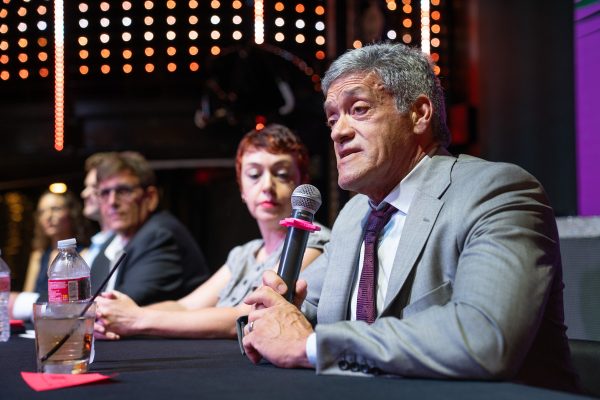
Has lived in West Hollywood for 36 years.
Occupation: Civil rights attorney
Endorsements: Association for Los Angeles Deputy Sheriffs, LA County Firefighters, the West Hollywood Municipal Employees Union, Ben Allen, John Heilman, Lauren Meister, and Steve Martin
Other candidates John will vote for: Declined to answer
Policy
Do you support renewing West Hollywood’s contract with Flock Safety? Yes.
“I would support renewing the city’s contract with Flock provided that privacy and usage safeguards were in place.”
Do you support a bike lane or sidewalk extension on Fountain Avenue? Maybe.
“I do not support the removal of traffic lanes on Fountain Avenue. I do support bike lanes where they make sense in other parts of the city. I do support sidewalk extensions where they are warranted.”
Do you support creating a TODAP (Transit Oriented Development Alternative Plan) for West Hollywood? Yes.
“I do support a TODAP for West Hollywood.”
Do you support renewing West Hollywood’s contract with Allied Universal to continue running the security ambassador program? No.
“I have serious reservations about renewing the security ambassador program. I would more likely support adding additional deputy sheriffs on foot patrol and in the entertainment districts.”
Do you support a vacancy tax on empty storefront properties? No.
“I do not support a vacancy tax on empty storefronts. They do not work as intended when the tax is passed onto commercial tenants in triple net leases.”
Do you support adding more digital billboards to Sunset Boulevard? Maybe.
“I approved the initial Sunset Strip billboard program but do find the current proposals to be excessive.”
Why are you running for City Council?
“I am running for City Council because there needs to be one seasoned voice in the room. I served on the council for 20 years and bring years of experience that will be helpful to the deliberations.”
What are your policy priorities?
“My policy priorities are keeping local control on land use decisions to prevent over-development, public safety and economic development on commercial corridors.”
How will you address the high cost of living in West Hollywood?
“West Hollywood is a very desirable place to be. There are legal limits on what we can do to address the high cost of living within a capitalistic system. We can continue to strengthen our rent stabilization ordinance for tenants in existing rent controlled apartments and approve new developments with inclusionary housing units reserved for low and middle class income households.”
Larry Block
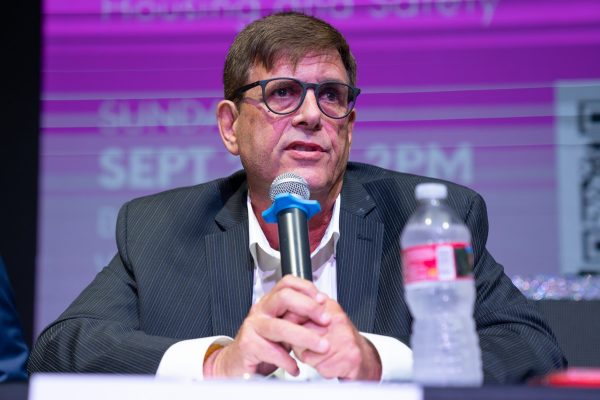
Has lived in West Hollywood for 40 years.
Occupation: Owner of BlockParty WeHo, publisher of WEHOonline
Endorsements: Association for Los Angeles Deputy Sheriffs, Greater Los Angeles Realtor Association
Other candidates Larry will vote for: Declined to answer
Policy
Do you support renewing West Hollywood’s contract with Flock Safety? No.
“I’ve changed my mind on this topic after a loud backlash. Instead we should opt into an Axon or Motorola system that we buy and control the data. I was Pro-Flock, but if a council member is going to listen to the voices of the people, then clearly they have spoken. We can do better. We can never be a beacon of hope for a transgender kid seeking medical treatment from a red state if their information has any chance of being shared. We can own our own data.”
Do you support a bike lane or sidewalk extension on Fountain Avenue? Yes, sidewalks.
“I support safe sidewalks on Fountain. I do not support the false sense of safety of 120 driveways intersecting a bike lane. We can have connectivity if we get on the same page with
our neighboring cities and not have a patchwork of bike lanes that do not connect – be it Fountain, Santa Monica Blvd, or Beverly.”
Do you support creating a TODAP (Transit Oriented Development Alternative Plan) for West Hollywood? Yes.
“100% support a TODAP and cannot be done soon enough. There is so much at stake.”
Do you support renewing West Hollywood’s contract with Allied Universal to continue running the security ambassador program? Yes.
“At this point it’s hard to recruit new Sheriffs and Allied has been an improvement over the previous Block by Block ambassadors.”
Do you support a vacancy tax on empty storefront properties? No.
“Commercial leases are 5, 10, 20 years in duration. Most leases are triple-net, meaning the tenant pays the expenses. A vacancy tax penalizes the other tenants. Residential leases are gross leases, tenant pays and the landlord picks up the expenses. So my question is would any resident want to pay extra because the space next to them was empty? People who want a vacancy tax do not understand a commercial lease.”
Do you support adding more digital billboards to Sunset Boulevard? Yes.
“Of course there will be some new billboards, but on a case by case basis. We need to maximize the benefits of our Sunset arts and billboard program without cannibalizing our precious assets. Sunset needs to remain vibrant and exciting without becoming chaotic and unsafe.”
Long Form Responses
Why are you running for City Council?
“I’m running for the city council because it’s becoming harder and harder to enjoy the dream of West Hollywood. The community is changing, and I’d like a seat at the table to help us craft policy that keeps the dream alive and restore West Hollywood as a beacon of hope. I’m the oldest guy in the race with a lifetime of experience to share, and I enjoy fixing things, building things and solving people’s problems.”
What are your policy priorities?
“Public Safety is my top priority. Residents need to be able to feel safe to walk their dogs at night. Entrepreneurs need to be able to imagine a new business without a homeless person in front of the for-lease sign. We can’t build a community with the rash of public safety issues we have been facing. Protecting seniors and those with disabilities is another top priority. We have to keep the promise of WeHo.”
How will you address the high cost of living in West Hollywood?
“West Hollywood has the highest rents, the highest cost of labor, and the highest sales tax. The cost of labor and the highest sales tax, which will be 11%, were voted on by the city council. As a councilmember, we can’t lower the rents or the price of gas, but we can run a smart city and offer residents a free parking pass at city garages and other benefits to residency in West Hollywood.”
Kyle Brazeal
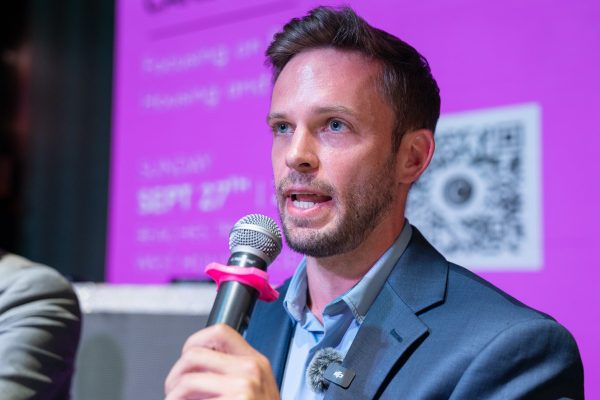
Has lived in West Hollywood for 11 years.
Occupation: Finance
Endorsements: West Hollywood/Beverly Hills Democratic Club, Equality California, HONOR PAC, Association for Los Angeles Deputy Sheriffs, Greater Los Angeles Realtors Association, Democrats for the Protection of Animals, John Heilman, Lauren Meister, and Rick Chavez Zbur
Other candidates Kyle will vote for: Declined to answer
Policy
Do you support renewing West Hollywood’s contract with Flock Safety? Maybe.
“A contract with significant public safety and privacy implications requires meaningful public input and trust. Before moving forward, public town halls with residents, sheriff’s representatives, city staff, and privacy advocates should examine safeguards against misuse and inappropriate data access, storage, and sharing so our approach protects both community safety and privacy.”
Do you support a bike lane or sidewalk extension on Fountain Avenue? Yes, sidewalks.
“The priority on Fountain Avenue should be extending sidewalks to become ADA-compliant and safe for pedestrians. Rather than eliminating hundreds of parking spaces to place a bike lane on a road carrying 35,000 cars a day, I would prioritize an east-west bike path on a calmer, safer street, like Willoughby, to enhance cyclist safety while preserving mobility and parking for our residents.”
Do you support creating a TODAP (Transit Oriented Development Alternative Plan) for West Hollywood? Yes.
“A TODAP protects residents’ ability to shape development, guided by the careful, neighborhood-specific analysis led by our city staff. By law, a TODAP produces the same housing capacity, but it allows our community to shape it in a thoughtful way that strengthens protections for our rent-stabilized housing and considers our unique emergency access needs, commercial activity, transit options, and infrastructure capacity.”
Do you support renewing West Hollywood’s contract with Allied Universal to continue running the security ambassador program? No.
“I would not support renewing the contract in its current form because the program has not demonstrated improvements in public safety and homelessness that justify spending more than $5 million annually. I support a tiered public safety structure that includes unarmed responders, but their value must be measured through meaningful results beyond the volume of calls and contacts.”
Do you support a vacancy tax on empty storefront properties? Yes.
“I support a limited commercial vacancy tax that discourages landlords from holding storefronts empty while protecting small property owners making good-faith efforts to find tenants. Revenue from the tax should help new businesses fund tenant improvements, pairing accountability for prolonged vacancies with practical assistance to help fill empty storefronts and bring those spaces back to life.”
Do you support adding more digital billboards to Sunset Boulevard? Maybe.
“Billboards can generate revenue for city services, but the city allowed an overproliferation of large, animated signs and granted exceptions to standards meant to protect residents. I would oppose new billboards that worsen light intrusion or otherwise erode quality of life in surrounding neighborhoods.”
Why are you running for City Council?
“I believe residents deserve a real voice in shaping the local decisions that impact their daily lives. I saw a Council majority that dismisses resident concerns to prioritize the preferred projects of outside entities with significant political or financial interests in our city. Residents are left living with the consequences while elected officials secure the relationships and donors needed to advance their political careers. While other candidates relied on developers and outside interests to fund their campaigns, I built a campaign funded by and accountable to West Hollywood residents so we can elect City Councilmembers focused on protecting residents from displacement while fighting for the high quality of life they deserve.”
What are your policy priorities?
“My priorities are housing stability, public safety, and a strong local economy, guided by a City Hall that listens before acting and is accountable for results. We should preserve rent-stabilized homes, protect renters against displacement, and create new housing with dedicated affordability through planning shaped by residents and city staff to protect neighborhood livability. Public safety policies should deliver measurable improvements in neighborhood safety, homelessness, and traffic collision prevention. By streamlining bureaucracy and supporting sensible, balanced policies for local businesses, we can create a safe, inviting city where residents can remain in their homes and enjoy the vibrant business corridors that bring West Hollywood to life.”
How will you address the high cost of living in West Hollywood?
“City Hall should help make life more affordable by avoiding unnecessary fees and regulations that increase costs for residents and local businesses. I would revisit local sales taxes and evaluate opportunities to reduce that burden through disciplined spending while protecting essential services. Preserving rent-stabilized homes and enforcing protections against harassment and displacement can help residents maintain predictable housing costs as other expenses rise. We must also maintain a dependable safety net, ensuring people struggling to make ends meet can access food assistance, healthcare, housing support, and services that help them remain in our community.”
Chelsea Byers
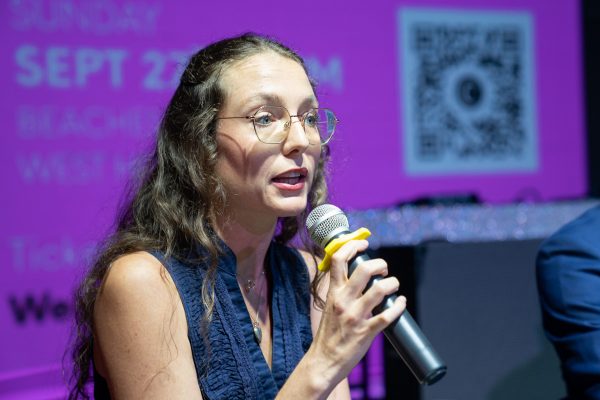
Has lived in West Hollywood for 6 years.
Occupation: Incumbent Councilmember, policy director at housing affordability advocacy organization
Endorsements: Los Angeles County Democratic Party, the California Working Families Party, the Sierra Club, Streets for All, Laura Friedman, Lindsey Horvath, Jeff Prang, LA County Federation of Labor, LA/OC Building and Construction Trades Council, LA County Firefighters Local 1014, and more
Other candidates Chelsea will vote for: Declined to answer
Policy
Do you support renewing West Hollywood’s contract with Flock Safety? No.
“I have been the leading voice on City Council against Flock since the time it was brought to Council as part of a broader surveillance expansion and continue to advocate against the use of this product in our City.”
Do you support a bike lane or sidewalk extension on Fountain Avenue? Yes.
“I ran in 2022 as a supporter of the Fountain Avenue streetscape project, and I continue to support it today. Fountain should be a neighborhood street where people, particularly children, those with disabilities, and the elderly, feel safe walking, biking, and crossing the street, and we should work quickly to improve the safety, expand the sidewalks, and beautify the street.”
Do you support creating a TODAP (Transit Oriented Development Alternative Plan) for West Hollywood? No.
“With the K-Line Northern Extension coming to the City in the years ahead, I support creating more transit-oriented housing, which is made possible under the recently approved state law SB79. We should treat the housing affordability crisis we are facing like the emergency it is and work to build the housing our community needs in the years ahead.”
Do you support renewing West Hollywood’s contract with Allied Universal to continue running the security ambassador program? Maybe.
“I support the security ambassador program and unarmed responders in general. However, upon learning that Allied Universal has ties to DHS and ICE activity, it feels incredibly important that we revisit options and ensure we are investing our public dollars into companies that reflect our values and promote the safety of all residents and visitors.”
Do you support a vacancy tax on empty storefront properties? No.
“A thriving commercial corridor is an essential backbone of our city, and we should be addressing the barriers that can leave commercial spaces vacant, including the ways in which the City itself can create unnecessary obstacles for businesses trying to open and succeed. This would include clearing roadblocks for new businesses trying to open, cutting the time and costs to open businesses, and better coordinating the countywide agencies like electric and fire, who can often slow down opening. ”
Do you support adding more digital billboards to Sunset Boulevard? Yes.
“Sunset’s digital billboard program was established to generate much-needed revenue to fund the City’s basic services and deliver the supportive care our community relies on — everything from sidewalk maintenance to our social service programs for renters and adults aging in place — the investments in our City’s future depend on ensuring this program’s success.”
Why are you running for City Council?
“My commitment to the work of improving our City and advancing care in our communities is deeply personal. My family could not afford health care despite the long days my dad worked in construction, and like so many families, we lost our home during the 2008 financial crisis. That experience has shaped the issues I prioritize on West Hollywood’s City Council. Challenges facing working families today require real action. Renters are being squeezed by the cost of housing. Wages are not keeping up with the cost of living. Women, queer people, and immigrants are under constant attack by this administration. West Hollywood is a community that has the opportunity and the means to lead with compassion, courage, and urgency. Our city must continue to be a model for what it looks like to protect vulnerable people, address the climate crisis, and make government work for those who need it most.”
What are your policy priorities?
“In my time in office, I have been working to implement West Hollywood’s Housing Element and the 116 strategies outlined in that plan to unlock greater affordable housing capacity locally, alongside the ongoing work to bring the Metro K Line Northern Extension into West Hollywood. From there, West Hollywood’s broken network of bicycle lanes needs ongoing support, and we must have a mobility-minded leader moving this infrastructure work forward in the City. As a third priority policy area, West Hollywood’s Climate Action Plan outlines ambitious policy goals, many of which stand to be undermined or challenged by special interests in our City. Building modernization and energy efficiency standards are critical ways the City can mitigate our carbon output, and furthering and reinforcing these policies with programs and financing to support the mandatory changes is going to be a major part of the City’s future work.”
How will you address the high cost of living in West Hollywood?
“Affordability is the defining issue facing families in my city as well as many families across LA County. West Hollywood is a city of renters, and too many of our residents are rent-burdened, paying more each month just to stay in the community they call home. West Hollywood has a responsibility to build more housing at every income level, protect tenants, and plan for growth in a way that reflects our values. We need to continue to lead on policies that make it easier and more affordable to build the housing our community needs and for businesses to get started and open. We can also continue investing in our social service programs that support people aging in place and expand this programming to support more families through child care resources. Every city has a role to play in tackling the affordability crisis, and West Hollywood can show it is possible to grow while staying true to who we are: a city that protects renters, supports working people, welcomes LGBTQ+ residents and seniors, and believes everyone deserves a safe, stable, and affordable place to live.”
Alden “Marlon” Gobel
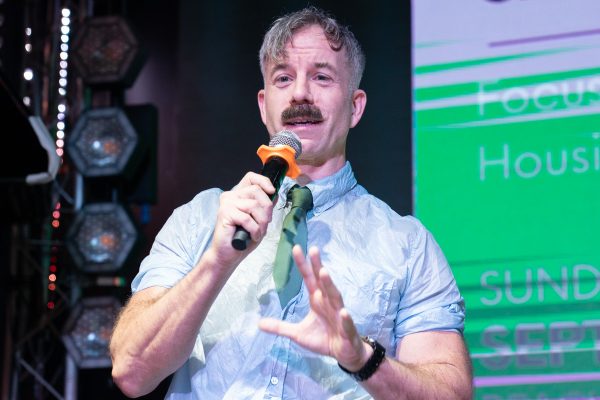
Has lived in West Hollywood for 5 years.
Occupation: Fashion designer and creative director
Endorsements: N/A
Other candidates Marlon will vote for: Chelsea Byers
Policy
Do you support renewing West Hollywood’s contract with Flock Safety? No.
“I do not feel that overreaching mass surveillance is ever a good idea. There are other ways to get the police the information they need without using the Flock camera system and Flock owning the aggregate data.”
Do you support a bike lane or sidewalk extension on Fountain Avenue? Yes.
“With gasoline prices reaching $6.50 per gallon here in LA, it is getting nearly unaffordable to fill a car’s tank. That means the way people commute and move through West Hollywood is going to change, and that’s not going to be car-focused, so we need to be prepared for that with robust mobility systems like bike lanes, transit, and great sidewalks.”
Do you support creating a TODAP (Transit Oriented Development Alternative Plan) for West Hollywood? Maybe.
“I am in favor of the need for West Hollywood to be in control of the development process, and we can look to Beverly Hills as an example of how to successfully implement the SB 79’s requirements. We need affordable housing, but we need a plan for development that addresses the needs of residents and business owners.”
Do you support renewing West Hollywood’s contract with Allied Universal to continue running the security ambassador program? Maybe.
“I think the security ambassadors bring a much-needed level of padding and connection between everyday residents/guests and the police department while relieving pressure on our sheriffs. But information is still pending from Allied on how connected they are with ICE and Homeland Security. That information will determine our future working with them.”
Do you support a vacancy tax on empty storefront properties? Maybe.
“It is something to explore. It’s important to make it easier for young emerging businesses to move into West Hollywood without landlords waiting for cash-cow corporations to fill up their spaces.”
Do you support adding more digital billboards to Sunset Boulevard? Yes.
“These things must be tastefully done and created with consideration of the surroundings. I don’t want Sunset Boulevard to become a Times Square replica chaotic orgy of light pollution.”
Why are you running for City Council?
“West Hollywood thrives on bold vision, authentic expression, and collaborative leadership. I have spent my career turning ambitious ideas into reality by balancing artistic execution with rigorous operational strategy. When I launched my eponymous brand, MARLON GOBEL, it demanded absolute strategic precision—skills that translated into immediate global partnerships with historic institutions like Bergdorf Goodman, Swarovski, and the Fashion Institute of Technology. Over a twelve-year career, my work has been recognized by The New York Times and trusted by legendary creative icons because I deliver on bold ideas, resilience, and unique innovation. West Hollywood deserves leadership that understands how to manage complex operations while preserving our distinct, rebellious, and authentic spirit. I will bring fiscal discipline, project management expertise, and an unwavering dedication to making our community a vibrant, sustainable, and forward-thinking destination for residents and creators alike.”
What are your policy priorities?
“1. Affordable Housing
2. A Freedom of Living Standard (anti-surveillance, self-expression, non-discrimination)
3. Compassionate Public Safety”
How will you address the high cost of living in West Hollywood?
“I feel like my answer was covered in my response [to the first long form question].”
Chukwudubem “Chiedu” Egbuniwe
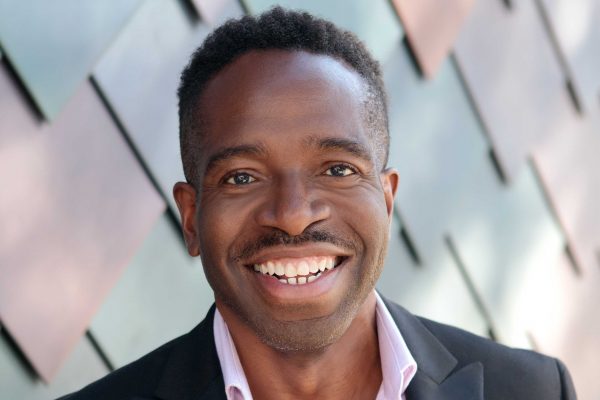
Has lived in West Hollywood for 22 years.
Occupation: IT professional and consultant
Endorsements: N/A
Other candidates Chiedu will vote for: Declined to Answer
Policy
Do you support renewing West Hollywood’s contract with Flock Safety? No.
“After years of working directly with data security and privacy issues as an IT Manager, it is critical that our data is with trustworthy vendors.”
Do you support a bike lane or sidewalk extension on Fountain Avenue? Yes.
“Yes, but I would adjust the timeline to after the Olympics in 2028, re-order the phases of the project, and greatly expand accessibility to e-Bikes in preparation.”
Do you support creating a TODAP (Transit Oriented Development Alternative Plan) for West Hollywood? Yes.
“Yes, most definitely. The TODAP is central to my priorities.”
Do you support renewing West Hollywood’s contract with Allied Universal to continue running the security ambassador program? Maybe.
“I would renew a short-term contract, revise our needs with a focus on more highly trained security staff, and offer Allied (and other vendors) a chance to provide a bid for more highly trained staff.”
Do you support a vacancy tax on empty storefront properties? Not answered.
[The candidate did not respond to this question.]
Do you support adding more digital billboards to Sunset Boulevard? Not answered.
[The candidate did not respond to this question.]
Why are you running for City Council?
“The city needs people who listen to residents and business owners: someone who can bring people together. As an IT professional and through my work with the city, I bring decades of strategic, big picture thinking and consensus building. I’ve served this city for over two decades, working on the WeHo40big-pictureconsensus-building Action Team, as a panelist on the Arts Grants, the Pride Arts Grants, and as a commissioner on the LGBTQ+ Commission. It’s time for me to deepen my service to my community.”
What are your policy priorities?
“Housing accessibility, small business support, and sensible safety. Rezoning for mixed-use development is central to my platform. In accordance with SB79, I propose a TODAP, focusing development along commercial corridors like Santa Monica, with small businesses on the first floors and residences on higher floors. We would see more foot traffic and greater safety around these small businesses, and less dependency on driving for services. I would also expand foot patrols by law enforcement and security ambassadors.”
How will you address the high cost of living in West Hollywood?
“We need sensible development and strict enforcement of affordable housing percentages for new development. We have to follow state law SB79, but with a TODAP we can restrict development to commercial corridors and preserve the character of our neighborhood streets. With new high-density mixed-use developments on commercial corridors, similar to the Trader Joe’s development near Plummer Park, we have an opportunity to add affordable housing units and foot traffic to support businesses in these spaces.”
LA County will start sending out mail-in ballots on October 5th; early voting will begin on October 20th, and election day is November 3rd.
Caleb Kaufman is a California Local News Fellow placed with the Los Angeles Blade. The California Local News Fellowship is a state-funded initiative to support and strengthen local news reporting. Learn more about it at fellowships.journalism.berkeley.edu/cafellows.
West Hollywood
The City of West Hollywood celebrates 100 years of Route 66
WeHo commemorates the queer possibility that this route represents
What is the true significance of Route 66?
Aside from some hit songs and the Disney movie Cars, many Angelinos may not see the value of this road beyond its exceptional length. It’s often forgotten that for thousands of people throughout American history — especially queer people — Route 66 offered a way forward. A way to leave behind their drab day-to-day and follow their dreams, with this highway carrying them across the country into a whole new world of unchecked possibility. And as Route 66 eventually takes travelers into the heart of West Hollywood by means of Santa Monica Boulevard, it served as a path to freedom for people who saw the city as a place where they could truly be themselves.
Whether it’s folks from the 1950s searching for community or it’s Chappell Roan longing for her ‘Pink Pony Club,’ Route 66 has a long queer legacy of carrying hopeful LGBTQ+ people to the Pride that this city promises us all. It represents a beautiful history of LGBTQ+ exploration, one that will be celebrated in full force on Sunday, August 16, 2026 at the West Hollywood Route 66 Centennial Celebration.
Hosted at Plummer Park, the Centennial provides a celebration of ‘travel, connection, and cultural exchange’ through a whole day of family-friendly activities. It’s only one of the countless festivals happening across the country for this landmark anniversary. But while there may be other celebrations, WeHo stands out by using this historic date to honor what this world-famous route has meant to LGBTQ+ travelers across history. According to Rebecca Ehemann, City of West Hollywood Arts Manager, “People still see West Hollywood as a place where creativity, community, and reinvention thrive – the same things that brought travelers west on Route 66 for generations.”
“It’s a reminder that the spirit of travel and possibility is still alive,” Rebecca continued, describing why the city decided to host such a big celebration. “It’s a simple, bold way to mark the neighborhood and to visually celebrate how central the LGBTQ community is to the city…and [how] people from across the country continue to find their way to West Hollywood with that same sense of hope and excitement.” It’s a vibrancy that Rebecca and her team hope to spotlight through the event, though one aspect intends to really showcase how intertwined Route 66 is with this city’s queer history: the art.
Along with transforming a portion of Santa Monica Boulevard into a colorful corridor filled with the work of LA-based artists, the City will also be unveiling a special Route 66 sign that captures the significance this route has had for WeHo residents past and present. It’s currently being crafted by local artist Sküt, who explained, “This project is my way of giving something back while celebrating West Hollywood’s legacy as a trailblazing city, a sanctuary for the LGBTQ+ community, and an important destination along Historic Route 66.”
Known for combining bursting colors with modern technology, Sküt promises a reimagining of the Route 66 sign people know, with this new piece being unveiled at the midpoint of the Centennial Celebration. While the artist has remixed this classic signage through their work before, they’re promising something totally new with this piece, saying, “Up close, the design reveals subtle details that add depth, along with thoughtful color references that honor our community’s progress.”
“Route 66 is woven into Weho’s history, even if many people don’t immediately make that connection,” Sküt emphasized. “What better way to celebrate its journey from Chicago to the Pacific than by marking this milestone with public art that reflects West Hollywood’s singular identity.” It’s a sentiment that Rebecca wholeheartedly agreed with, affirming, “Through the new Route 66-themed artwork commissions, custom “WeHo 66” signage, car show, Charles Phoenix event, and the Summer Sounds concert, we’re honoring both the nostalgia of the road and the creative spirit that defines West Hollywood.”
The Route 66 Centennial Celebrations spotlight this vital piece of queer history that not enough people recognize today. For people across the country, this route represents the path towards Pride that they cannot wait to embark on.
And even though it looks very different today than when it was made 100 years ago, Route 66 has always served as a way for travellers to chase their dreams. This is especially true for the queer explorers who traversed it throughout history, and in 2026, we honor them and the road they used at the Route 66 Centennial Celebration.
The Route 66 Centennial Celebration is a free event that takes place on Sunday, August 16, 2026, from 10 a.m. to 2 p.m. at Plummer Park, located at 7377 Santa Monica Boulevard, with the City of West Hollywood’s end-of-season Summer Sounds free outdoor concert series following afterward from 4 p.m. to 6:30 p.m.
West Hollywood
West Hollywood flooded, LADWP and the City respond
The Sunset Strip rocked by a water main break
When you think of ruckus on the Sunset Strip at 5 am, maybe it’s some unruly band having a late night after playing at the Viper Room or the Whisky a Go Go. Instead, local residents were met with a cacophony of helicopters around 5 and 6 am this morning. The reason: a water main burst at the crowded intersection of Sunset Blvd and Holloway Drive.
Los Angeles Department of Water and Power (LADWP), after addressing the flood damage, has located the rupture of a 36-inch LADWP steel main. There are traffic closures on Sunset Blvd. between Larabee Street and LaCienega Blvd, as well as nearby streets for public safety because the pavement is literally shattered under the water pressure.
LADWP has confirmed that no water service interruptions are anticipated for residents or businesses, and water in the City of West Hollywood is clean and safe to drink. It’s likely traffic may be a recurring issue as the city works to repair a major intersection in the heart of the West Hollywood/Sunset Strip area.
West Hollywood Mayor John Heilman says, “We are grateful that no injuries have been reported as a result of this significant water main break. We are working closely with the Los Angeles Department of Water and Power, the Los Angeles County Sheriff’s Department, and our regional partners to respond to this incident as quickly and safely as possible.”
West Hollywood is making quick work of it and offering periodic updates at:
https://www.weho.org/Home/Components/News/News/12208/23
Heilman continues, “I want to thank our Public Works, Community Safety, and Parking teams, along with all first responders, for their swift and coordinated efforts. We know these road closures and traffic impacts are disruptive, and we appreciate everyone’s patience as crews work to stabilize the area, assess the damage, and begin repairs.”
Traffic remains heavy; be sure to plan accordingly if navigating through West Hollywood.
Residents, property owners, tenants, and business owners who have experienced property damage or other losses related to the water main break may submit a claim directly to LADWP. Details: www.LADWP.com/claims
West Hollywood
Lesbian cinema, from the archives and beyond, lead this short film festival
This Saturday, the June L. Mazer Lesbian Archives celebrates Lesbian Visibility Week with archival and contemporary sapphic shorts.
At the June L. Mazer Lesbian Archives in West Hollywood, Alisha Graefe and Kymn Goldstein are rummaging through a treasure trove of unknown lesbian films. Large, neon orange bins sit at their feet, filled to the brim with VHS tapes donated by queer filmmaker Rosser Goodman, who in the late 90s and early 2000s programmed the underground lesbian screening series “Film Fatale.”
Her monthly event provided a safe haven and experimental ground for lesbian film in L.A., shining light on new voices, stories, and perspectives that explored the nuances of living life as a queer woman.
This Saturday, April 25, Graefe and Goldstein are paying homage to Goodman’s legacy with a cinema-centered event of their own: a short film festival that brings together an eclectic, curated mix of archival works and newly submitted pieces from emerging lesbian filmmakers around the world. These works, accompanied by panel discussions, will screen all day in three different blocks at the Pacific Design Center’s Silver Screen Theater.
Like “Film Fatale,” this festival is not just a showcase of resonant, timely art: it’s an opportunity for queer people to intentionally gather, reflect on their history, joy, and resilience, and to soak in spaces that celebrate them.
“The archives are full of history, but every single day we make history,” Goldstein, who is the archive’s executive director, told the Blade. “This festival is an act of creating history. [We’re] bringing people together to celebrate Lesbian Visibility Week and to watch these films. [And] you know what, every week is Lesbian Visibility Week at the archive.”
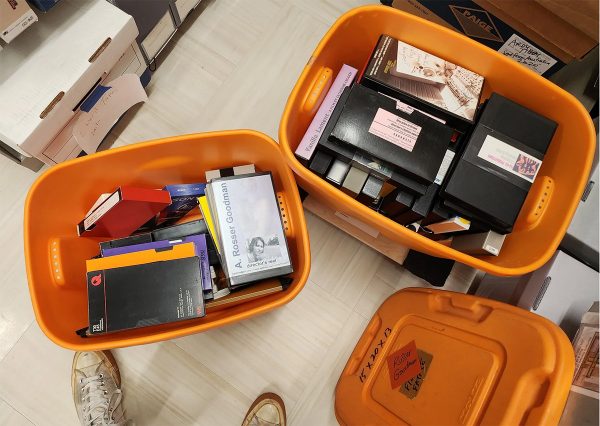
When they were first planning out the film festival together, Goldstein and Graefe — who serves as the Mazer’s full-time archivist — sifted through Goodman’s collection, letting the sounds of static, VCR clicking, and tape-scrubbing fill the room. One of the films they watched, and which will screen at Saturday’s festival, is Goodman’s own 14-minute short, “Life’s a Butch!”: a silent comedy about a woman’s antics to impress her new femme crush with clumsy, masc charm.
It was made over 25 years ago, but its tenderness and whimsy are still palpable today. This, and the other films in the festival, speak to both singular and universal emotions and experiences lesbian, queer, and sapphic people have experienced and will continue to experience across time and space.
This interconnectedness in films, communities, and shared memories between past and present excites Goldstein. “The stories of coming out, of crushes, of losing love…[They] are the same topics and subjects that come up today, especially the political things we’re going through. There’s a continuity across all of it.”
And where there’s continuity, there are clues and maps that pinpoint paths of resistance, dialogue, and survival. When people see their lives, or the lives of others in their communities, reflected on screen and in narratives they can interact with, they are able to draw upon history to craft their own ways forward.
The film festival also offers local community members an entryway into the archive, a longstanding community space that houses journals, photographs, books, films, letters — all tangible materials that people are encouraged to touch and engage with, whether it’s to further their research, spark ideas, or simply be more intimately in conversation with the past.
“There are tons and tons of stories,” Goldstein said, who is focused on maintaining and growing the archive’s collection of ephemera and other personal materials from the community. “It’s living, breathing history in a variety of forms, all hidden in different-sized boxes that you just have to open to see what’s inside.”
To support and learn more about the archive’s upcoming film festival, collections, and other events, visit their website.
Kristie Song is a California Local News Fellow placed with the Los Angeles Blade. The California Local News Fellowship is a state-funded initiative to support and strengthen local news reporting. Learn more about it at fellowships.journalism.berkeley.edu/cafellows.
West Hollywood
John Heilman and Danny Hang will serve as WeHo’s new Mayor and Vice Mayor
Last night, community members and local officials gathered to celebrate new leadership and bid a warm farewell to outgoing Mayor Chelsea Byers.
On Jan. 12, West Hollywood residents packed the City’s chambers at 6 p.m. to honor the work of outgoing mayor Chelsea Byers and witness councilmembers John Heilman and Danny Hang take their oath of office as they respectively assume their roles as Mayor and Vice Mayor for 2026.
In her last address as Mayor, Byers spoke about the optimism she holds onto in these unsteady times. To her, West Hollywood is a unique City: one that has become a model for what can be possible in an unjust society. “It’s us against the world. It’s West Hollywood on the stage,” Byers said. “It’s our story to tell, and every single person here contributes in such great ways to that.”
Byers was awarded a plaque on behalf of West Hollywood council members for her outspoken commitment to LGBTQ+ rights, economic justice, housing affordability, and policies that emphasize equity and inclusivity in West Hollywood.
Her leadership remains a bright, guiding light for Mayor Heilman, who was part of West Hollywood’s first city council after the independent city was incorporated in 1984. The spirit of that initial group remains today: queer, progressive, and led for and by the people. Yesterday’s ceremony marked the beginning of Heilman’s ninth time serving as Mayor, as well as his last year on the city council due to term limits.
Now, he leads side-by-side with a self-proclaimed “newcomer,” Danny Hang.
From the 626 to the Westside: Hang’s roots and journey
Hang was born in Monterey Park, a city in the San Gabriel Valley. The region is known for its diverse communities and AAPI-rich culture and history, and Hang recounted to the Blade the deep sense of belonging and comfort he felt growing up there. “I could go to a restaurant, speak Vietnamese or Chinese,” Hang said. “There are people who look like me out there. It is my home away from home.”
After college, he worked at the Social Security Administration, where he helped retirees, disabled people, and those impacted by loss file for Supplemental Security Income (SSI). The work was fulfilling, and he loved feeling that he had a tangible impact on others’ lives: that he could help residents grappling with difficult bureaucratic processes.
This passion grabbed the attention of L.A. County Supervisor Lindsey Horvath, who tapped Hang into serving on West Hollywood’s Disabilities Advisory Board in 2017. Hang eagerly accepted the role, having always been drawn to the vibrant, queer cultural hub. “WeHo was always the land of the unicorn: the land of magic,’ Hang told the Blade. “[This] was a town where I could be open, by myself, and find other people who were also LGBTQ+.”
After serving on the City’s Disabilities Advisory Board and, subsequently, the county’s Business License Commission, Hang noticed a lack of AAPI representation in local leadership. “There aren’t many AAPI people at all in West Hollywood. After I was on the commission, [I thought]: Hey, I think I want to run for city council,” Hang told the Blade.
Creating more inclusive leadership in WeHo
In 2024, Hang was elected to West Hollywood’s city council, becoming the first AAPI councilmember in the City’s 40 year legacy. “I want to see people who look like me in local government, because I want this community to be reflective of the modern-day people who live here. We’re a diverse community, and there’s no reason why we shouldn’t have people of color on the council, as well as more people of color appointed to our boards and commissions.”
Last night, local officials offered encouragement, support, and affirmation to Hang after he took his oath of office. “You’re already making history and certainly making waves across, not just your home region of the San Gabriel Valley, but certainly in California,” said Monterey Park councilmember Henry Lo.
Afterwards, Hang addressed the room, thanking residents, fellow council members and his family. “Standing here as the first AAPI elected to the West Hollywood City Council is deeply meaningful, and I couldn’t have done it without my parents. [They’re] right here in the front row,” Hang said. “My dad was a union worker, who showed me why standing up for workers matters. And my mom worked in a small business, owning a little nail salon in South Pasadena. She taught me what it means to care for others and to keep the community going.”
The year ahead: Heilman calls for residents to unite
Afterwards, Mayor Heilman spoke at length about the upcoming transitional year, the urgency of the current political climate, and ways that community members can step up to support each other. In his last term, he has set his eye on revitalizing the Sunset Strip, stabilizing rent and increasing housing affordability as well as examining the safety of the City’s foundational buildings, including the library and fire station.
He concluded his speech by making an unwavering stance on the “appalling” state of the federal government, stating that every West Hollywood resident must step up together in the face of ongoing federal attacks on the rights of LGBTQ+ people, specifically transgender people, as well as immigrants and other marginalized community members.
“This is a direct attack on our residents. It’s a direct attack on all of us,” Heilman said. “Now is not the time to hide. We need you…Ask what you can do to help people in the community,” he said, galvanizing residents to volunteer for the City’s various social services, nonprofits like Hollywood Food Coalition and Ascencia.
This call for unity and communal bravery echoes Byers’ belief in the courage of the people of West Hollywood. “41 years ago, a group of people defined what government could be,” Byers said. “We’re living the wildest dreams of people decades ago…and we get to be a bridge for that hope for the future. In such a critical moment, it’s truly our responsibility.”
Kristie Song is a California Local News Fellow placed with the Los Angeles Blade. The California Local News Fellowship is a state-funded initiative to support and strengthen local news reporting. Learn more about it at fellowships.journalism.berkeley.edu/cafellows.
West Hollywood
Administration refused to honor World AIDS Day; residents gathered with defiance, grief and love
Yesterday, members of the APLA Health Writers Group read moving stories to a large group of locals gathered at the AIDS monument.
On Monday, the federal administration did not honor World AIDS Day, for the first time since the international awareness day was created in 1988. In addition to significant funding cuts to organizations focusing on HIV preventative treatment and care, the government’s halting of this commemoration perpetuates a dismissive system of inaction against LGBTQ+ people.
And yet, over 50 community members filled the empty spaces of West Hollywood’s AIDS monument yesterday evening, waiting in the night chill as city officials delivered impassioned statements and writers from APLA Health read personal pieces that centered a grief and love for those lost to the epidemic.
Before the readings began last night, West Hollywood vice mayor John Heilman asked for residents to join him in a righteous rage against administrative apathy. “I want to ask us all to reflect for just a moment about all of the people we lost…I want us to reflect and get angry,” said Heilman. “We have a fucking president who won’t even recognize World AIDS Day.”
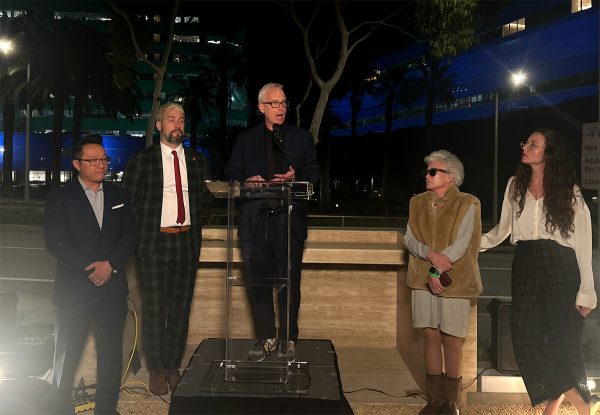
Irwin Rappaport, board chair for STORIES: the AIDS monument, echoed this immense disappointment. “Many of us here tonight lived through the 1980s, so we know what that’s like,” Rappaport said. “We also know that because of that neglect, because of that lack of caring from the federal government, we have to care for one another — and we know how to do that. When we don’t have recognition from others, we know how important it is to preserve our own history, to tell our own stories.”
Through heavy silence, five writers from APLA Health’s writers group stood tall before a podium and shared intimate writings they created about the epidemic and its personal impact on them. The collective was established in 1989 to provide an inclusive, expressive space for HIV-positive writers and allies to work on their writing and learn how to share their stories.
Writer Brian Sonia Wallace, who served as West Hollywood’s poet laureate from 2020 to 2023, has been working with the writers group for the last four years to help them hone and refine their narrative voices as they share their heaviest grief and the depths of their love for the people they lost to HIV and AIDS.
Hank Henderson, one of these writers, read from a diary entry from November 29, 1991. His voice, clear and strong, wavered as he shared about the death of his dear friend Richard. In a piece filled with lush, rich detail, painted clearly with a strong and loving voice, Henderson recounted a memory with Richard during the latter’s last years.
“The Santa Barbara sky is clear blue forever today…Yesterday came and went like a half-remembered dream between snooze alarms,” Henderson recited. “Last year, we walked to the beach. We spent hours there, played frisbee ourselves, brought the dog. Richard even yelled out 30-minute tanning turnover alarms. Yesterday, he took tiny, labored steps back to the car, used my shoulder to keep himself from falling over. Nobody said anything. We just pretend it’s normal.”
Another writer, Austin Nation, shared the story of being told he was HIV-positive at 26 years old. As a young nurse, he remembered the shock of seeing “young, beautiful men” arriving at the hospital covered in “purple, blotchy sores.” When he received his own test results, a paralyzing terror washed over his body. An incredulity followed the fear: why was this happening to him? “I got this thing for what?” Nation spoke. ”For having fun? For making love? And now it’s gonna cost me my life?”
But as he stood before the crowd, now 63 years old, he was met with applause and joy as he stated and repeated: “I’m still here. I’m still here.” The writers, in their grief and loss, have come to a place where they are able to share these stories, empowered and held. “In a world that writes off people with stories like mine,” Nation said. “It’s a hell of a good day to be alive.”
Kristie Song is a California Local News Fellow placed with the Los Angeles Blade. The California Local News Fellowship is a state-funded initiative to support and strengthen local news reporting. Learn more about it at fellowships.journalism.berkeley.edu/cafellows.
West Hollywood
West Hollywood kicks off community-focused programming for World AIDS Day
Since 1988, queer communities have come together on Dec. 1st to honor siblings and allies lost to the AIDS epidemic.
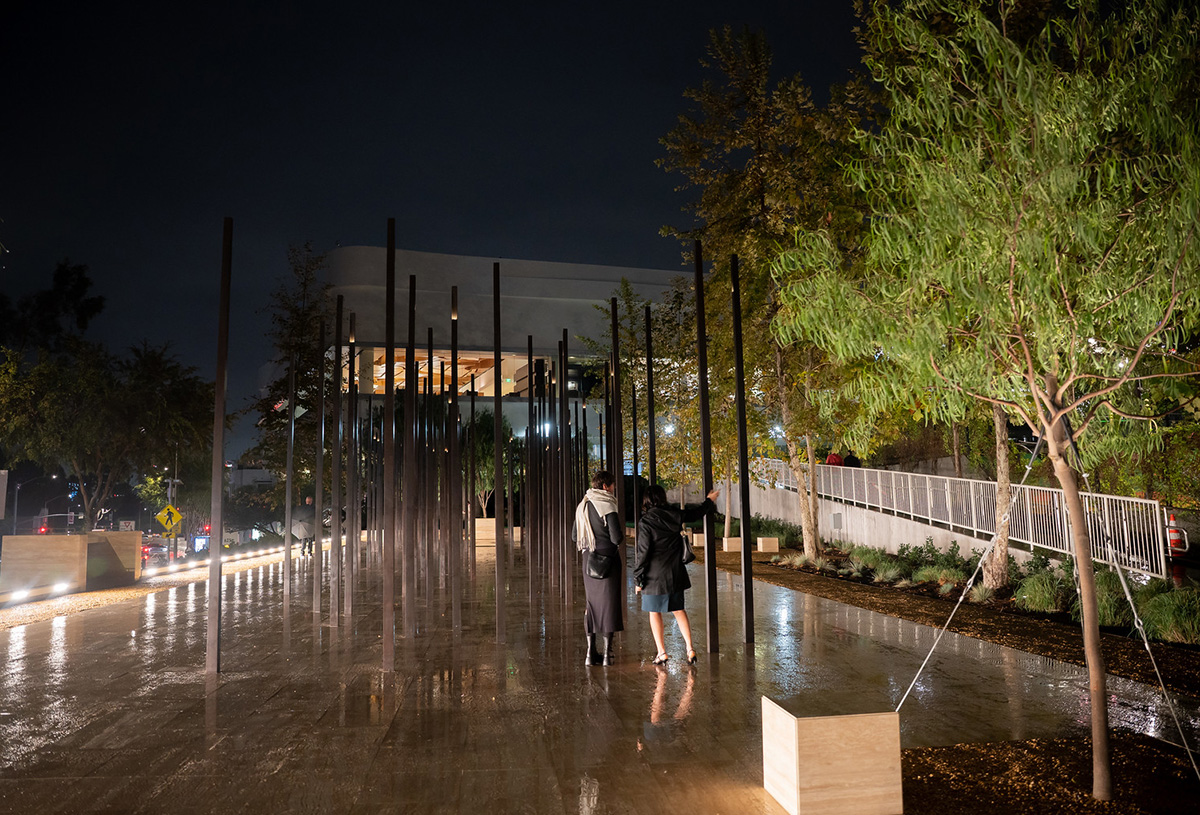
Since 1988, LGBTQ+ communities have come together on Dec. 1st to commemorate queer siblings and allies lost to the AIDS epidemic. This year’s World AIDS Day follows the theme “Overcoming disruption, transforming the AIDS response” and highlights the substantial funding cuts to research, health services, and community initiatives that have prioritized the safety of people with HIV and AIDS. The theme challenges people to think about “radical” ways to organize together and ensure that those who are impacted are able to access the care, treatment, and awareness that they need.
Beginning today, the City of West Hollywood is kicking off programming to recognize the historical transformation that local queer communities experienced during the AIDS epidemic. A panel from the AIDS Memorial Quilt will be available for viewing at the City’s Council Chambers at 625 N. San Vicente Boulevard through Monday, Dec. 15th.
Known as the largest community arts project in history, the Quilt is a powerful memorialization of loved ones who died during the epidemic. Each panel of the Quilt contains a story of remembrance, immortalizing a life cut short during the crisis. The project currently contains over 50,000 panels dedicated to over 110,000 people, all woven together in a 54-ton tapestry piece.
If you’re visiting the panel today, there will be an additional gathering opportunity tonight at the West Hollywood Park for STORIES: the AIDS Monument. From 5:30 to 8:30 p.m., members from the HIV-positive writers collective APLA Health Writers Group will present intimate readings that reflect on their experiences. Community members will be allowed time to wander through the monument and also preview the new Herb Ritts: Allies & Icons exhibition at ONE Gallery after the program. The art show includes striking black and white portraits of activists who stood in alliance with those most impacted during the AIDS epidemic.
Additionally, fresh flowers will be placed on the bronze plaques that line the City’s AIDS Memorial Walk. During the AIDS epidemic, West Hollywood was at the center of a rampant grief and loss that juxtaposed vibrant programming and efforts that boosted healing and fought against stigma and violence. It continues to be a vibrant space that houses various organizations and memorial spots that continue to uphold the revolutionary history and advocacy work that has continued since the epidemic’s beginnings.
Today, West Hollywood is in the process of executing its HIV Zero Strategic Plan, an initiative that began in 2015. Its goals include: expanding healthcare access for people living with HIV and AIDS, reducing the rate of infections, lessening health disparities and inequities for those impacted, and slowing the disease’s progress from advancing to AIDS.
According to West Hollywood mayor Chelsea Byers at a recent Cityhood event, the initiative carries forth the City’s “bold vision” and commitment to ensuring marginalized community members living with HIV do not face the life-threatening discrimination and health barriers that their elders experienced.
To learn more about the City’s programming, read here.
Kristie Song is a California Local News Fellow placed with the Los Angeles Blade. The California Local News Fellowship is a state-funded initiative to support and strengthen local news reporting. Learn more about it at fellowships.journalism.berkeley.edu/cafellows.
West Hollywood
Today, West Hollywood celebrates 41 years of queer cityhood
WeHo’s city officials are trying to preserve the fight for queer safety and rights that began decades before.
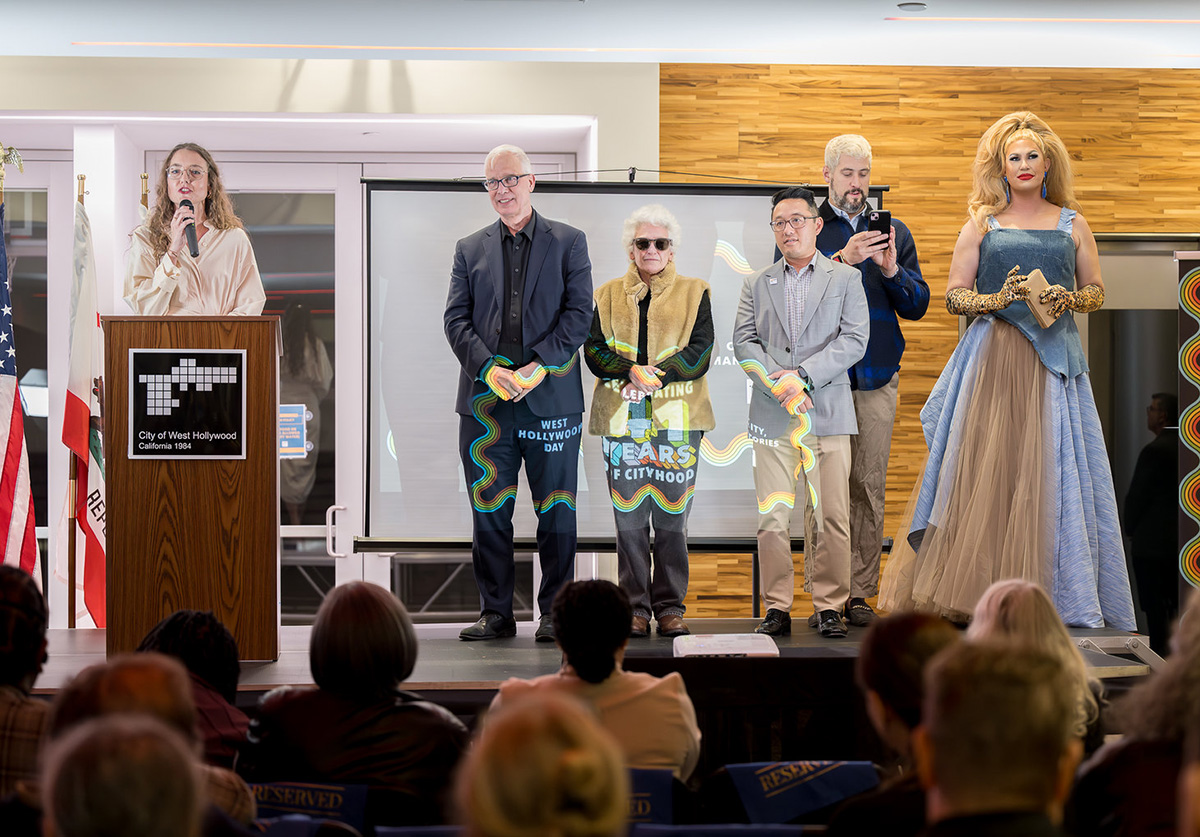
On Nov. 29th, 1984, West Hollywood was incorporated as an independent City, making its sovereignty official and solidifying it further as a sanctuary for LGBTQ+ community members, their stories, and their freedoms. Inspired by other prominent gay neighborhoods like New York’s West Village and San Francisco’s Castro District, West Hollywood was established by local queer advocates and residents. Their first city council was made up of a majority gay governing body — the first in the world, according to the West Hollywood History Center.
This political legacy, and the city’s vibrant and proudly queer history, continues to be preserved. On Monday’s celebratory event, West Hollywood mayor Chelsea Byers announced that the City’s current council “continues to be a majority-LGBTQ+ body,” holding tightly onto a “spirit” that reflects, prioritizes, and fights for Los Angeles’ queer community.
West Hollywood has been through various transformations, cocooning and revitalizing itself through the country’s evolving political and cultural upheavals. It has long been home to a ravishing nightlife that celebrates LGBTQ+ expression, and was a focal point for queer-led liberation and activism in the late 1960s and early 1970s. Trailblazers like Morris Kight led the first gay pride march through West Hollywood’s streets in 1970 and opened the Los Angeles LGBT Center to nourish the City’s robust and blossoming queer communities.
Today, West Hollywood continues to be the place where queer organizers and residents plant roots. Earlier this month, STORIES: the AIDS monument opened up in the City’s park after over a decade of work, shining a light on the legacies of gay activists, artists, historians, and community members who fought to survive as anti-gay stigma led to the erasure of their rights and lives.
As waves of anti-LGBTQ+ hate and violence continue to surge through the country, West Hollywood elected officials aim to continue doing the critical work that began decades before them: the work that protects the ability of queer residents to advocate for themselves, to live with protections and dignity, and to relish in joy. Mayor Byers is inspired by the resilience of the community members who stood together to establish this independent City in 1984. “The people who lived here…wanted a city with strong protections for renters, with progressive policies, and with a local government that would actually reflect and protect the people who call this place home,” said Byers, at the Nov. 24th celebration.
Over 40 years later, these needs have not changed. The way forward? Remembering and fighting for that initial promise and hope. “We are a chorus. We are a tapestry,” said Byers. “We are the product of thousands of people who, for more than four decades, have dared to say: We can build something better here.”
Kristie Song is a California Local News Fellow placed with the Los Angeles Blade. The California Local News Fellowship is a state-funded initiative to support and strengthen local news reporting. Learn more about it at fellowships.journalism.berkeley.edu/cafellows.
West Hollywood
From nickname to reality, the Rainbow District is made official by the City of West Hollywood
The mile along Santa Monica Boulevard from N. Doheny Drive to N. La Cienega Boulevard welcomes residents and visitors to come as they are
Even in today’s political climate, we will not be hidden.
The vibrant stretch on Santa Monica Blvd of over 50 local businesses, representing the full spectrum of LGBTQ+ expression, from N Doheny Dr to N La Cienega, has had the loving nickname of the Rainbow District for decades. Well, now it’s official. From nightlife to restaurants to community organizations, the City of West Hollywood has formally designated the space as such, honoring the neighborhood’s legacy as a safe haven for the queer community and beyond.
In addition to making the name official, the Rainbow District is being launched with a full range of social media, including Instagram, TikTok, and Facebook, keeping the residents and visitors updated on all upcoming events and happenings in the neighborhood.
Long known as a beacon of acceptance, inclusion, and visibility, where everyone is welcome, this iconic mile-long corridor is now formally recognized for what it has always been: a place where people from every walk of life can come together, be themselves, and celebrate the beauty of diversity.
City of West Hollywood Mayor Chelsea Lee Byers states, “For generations, the City of West Hollywood’s Rainbow District has been a place where LGBTQ+ people take their first steps into living openly, where the warm embrace of community is found at every turn, and where the joy of living out, loud, and proud fills the streets. The City’s official designation of the Rainbow District honors both the legacy and the future of this vibrant neighborhood, home to beloved entertainment venues, bars, and restaurants that have long served as cornerstones of LGBTQ+ life. Today, the Rainbow District is more alive than ever, and it will always stand as a beacon of hope, pride, and belonging and as a reminder that everyone deserves a place to celebrate joy, to be seen, and to be supported.”
The Rainbow District officially joins a nationwide list of iconic LGBTQ+ landmarks. West Hollywood will not be hidden amid political backlash and will continue to protect queer spaces, uplift queer voices, and foster a safe and joyful environment for all.
“This designation is not only a celebration, but it also serves as a promise,” said Visit West Hollywood President & CEO Tom Kiely. “A promise to keep LGBTQ+ spaces visible, valued, and vibrant for generations to come. As the Rainbow District continues to evolve, it will remain a place where locals and visitors alike can connect through culture, creativity, and community. The City’s formal designation affirms its significance and highlights The Rainbow District as the ultimate playground for travelers seeking a unique, inclusive, and authentic experience.”
The Rainbow District will be home to upcoming community events that include:
- Winter Market & Ice Skating Rink — December 2025
- Go-Go Dancer Appreciation Day — March 2026
- Harvey Milk Day — May 22, 2026
- WeHo Pride Weekend & the OUTLOUD Music Festival at WeHo Pride — June 5–7, 2026
Follow the Rainbow District on socials to discover local happenings, support small businesses, and be part of a neighborhood that celebrates every person for exactly who they are.
Instagram: @RainbowDistrictWeHo TikTok: @RainbowDistrictWeHo
Facebook: facebook.com/rainbowdistrictweho More Info: visitwesthollywood.com/rainbowdistrict
West Hollywood
West Hollywood’s AIDS Monument preserves the pain and power of people lost to the crisis
STORIES: The AIDS Monument is now available to view at West Hollywood Park, 15 years after its conception.
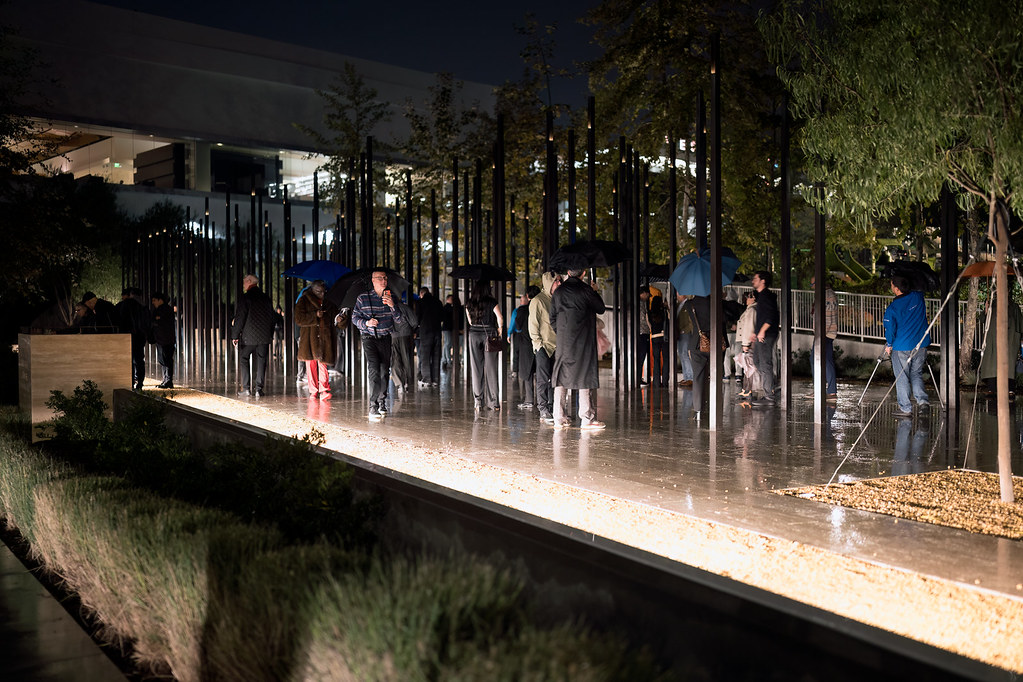
It was 1985, at the height of the AIDS crisis, when Irwin Rappaport came out as gay. As he came to terms with his identity, he witnessed people around him grow weaker: their faces becoming gaunt, painful lesions developing on their bodies. Five years later, he began volunteering as a young lawyer at the Whitman-Walker Clinic, a community health hotspot in Washington, D.C. that created the first AIDS hotline in the city, opened homes for patients with AIDS, and distributed materials that promoted safe sex.
The work being done at the clinic was instrumental, essential, and deeply painful. “When you see that sickness and experience that death among your friends and people you know, and when you’re writing wills for people who are much too young in ordinary times — it has an impact,” Rappaport told the Blade. “And even though in 1996 we saw life-saving medications come around, you never forget the sense of fear that permeates your life. The sense of loss.”
Determined to honor and share the legacies of people who died from AIDS, Rappaport joined the Foundation for the AIDS Monument (FAM) board to work towards the organization’s goal of creating a physical monument dedicated to memorializing these histories. FAM treasurer Craig Dougherty first conceived of this project in 2010 and, after 15 years, STORIES: The AIDS Monument is now available to the public for viewing.
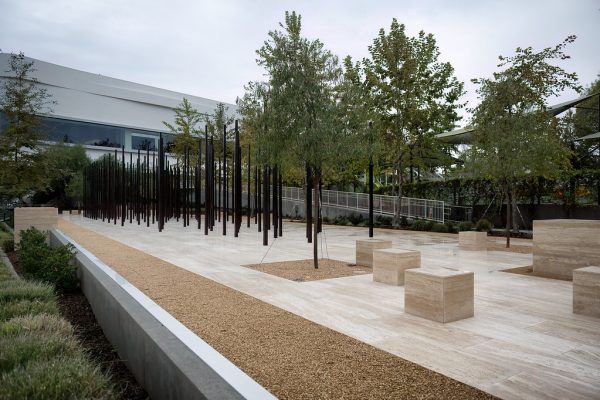
Created in collaboration with the City of West Hollywood, STORIES: The AIDS Monument is composed of 147 vertical bronze pillars known as “traces.” Designed by artist Daniel Tobin, 30 of these traces are engraved with words like: activism, isolation, compassion, and loss, which correlate to the over 125 audio stories collected and archived on the foundation’s website. This multimodal storytelling allows people who come across the monument to engage more intimately with the people represented by these physical pillars.
At nighttime, lights transform the monument into a candlelight vigil, providing a warm glow to a wanderer’s journey through the structure.
When people were able to walk around the traces at Sunday’s grand opening ceremony at the Pacific Design Center, the last remnants of the weekend’s rainstorm created a kind of “spiritual” and reverent atmosphere for those gathering, according to Rappaport. “I think there’s a certain peacefulness and serenity about the design, an opportunity for reflection,” he continued. “For some, it may bring back incredibly painful memories. It might bring back wonderful times with friends who are no longer here. It might remind them of their own caregiving or activism, or the sense of community that they felt in striving with others to get more attention to the disease.”
Now that the monument has been built, FAM has passed the mantle of management and programming to One Institute, a nonprofit that engages community members with queer history through panels, screenings, and other educational initiatives. One Institute plans to host monthly docent tours, art installations, and other special events during various LGBTQ+ national awareness days, including the upcoming World AIDS Day in December.
Rappaport also hopes to do outreach with local schools, so that young students are able to engage with the monument, learn about the people who were affected by the AIDS crisis, and interact with the ripples of transformation that this time period sparked in politics, research, the arts, and within society. “For younger people, I think [this is] an invitation for them to understand how they can organize about issues that they care about,” Rappaport said. “[So] they can see what the HIV and AIDS community did as a model for what they can do to organize and change the world, change culture, change law, change politics, change whatever they think needs to be changed. Because we had no other choice, right?”

Engrossing ‘Tip Toe’ delivers tension and an ominous warning

Eliot Glazer’s new book an engaging collection of essays

From bullying to bravo: Joey Zauzig talks finding yourself while making people feel seen

The California Gubernatorial Debate missed getting real

988 restores crisis services for LGBTQ+ youth

We asked WeHo City Council candidates your most pressing questions

Ana Brnabić becomes world’s first openly lesbian head of state

‘(Out) On the Road’ revels and reveals the joys of queer travel

Renee Good’s family files two federal lawsuits

House Democrats urge White House to confront Turkish government over anti-LGBTQ+ crackdown
-
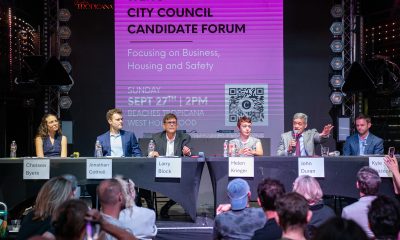 West Hollywood3 days ago
We asked WeHo City Council candidates your most pressing questions
-
 Serbia5 days ago
Ana Brnabić becomes world’s first openly lesbian head of state
-
 Travel4 days ago
‘(Out) On the Road’ revels and reveals the joys of queer travel
-
 U.S. Federal Courts3 days ago
Renee Good’s family files two federal lawsuits
-
 Turkey3 days ago
House Democrats urge White House to confront Turkish government over anti-LGBTQ+ crackdown
-
 Features3 days ago
The survivors we don’t talk about: October is Domestic Violence Awareness Month
-
 History3 days ago
10 explosions of queer history not to miss at this year’s Circa Festival
-
 LGBTQ Non-Profit Organizations3 days ago
Victory Fund board investigates former staffers’ allegations against CEO Evan Low
-
 National3 days ago
988 restores crisis services for LGBTQ+ youth
-
 Commentary13 hours ago
The California Gubernatorial Debate missed getting real