
News
Knives out for Buttigieg in debate as LGBTQ issues finally come up
Five takeaways on the Democratic candidates last 2019 foray
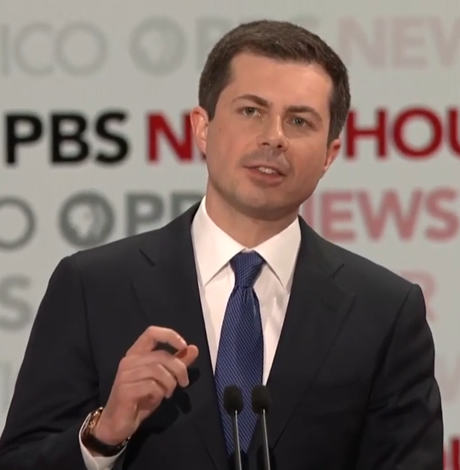
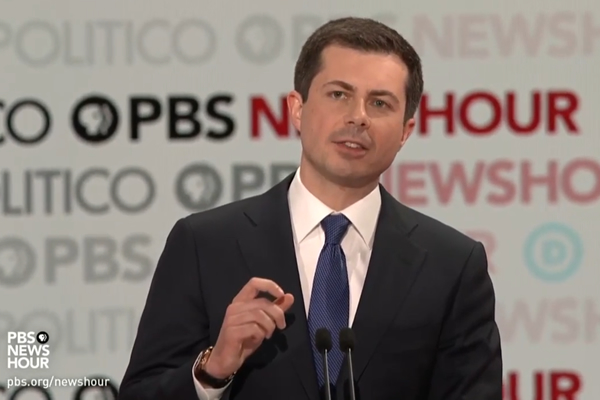
Mayor Pete Buttigieg (D-South Bend, Ind.) speaks at a Democratic primary presidential debate on Dec. 19. (Photo courtesy of PBS News Hour/POLITICO)
Climate change, health care — and for the first time this year in a substantive way, LGBTQ issues — were major topics during the Democratic debate Thursday night, when seven candidates squared off on stage for the last time in 2019 and South Bend Mayor Pete Buttigieg found himself the target of criticism.
In no particular order, here’s five takeaways from the PBS/Politico debate, which took place in Los Angeles at Loyola Marymount University’s Gersten Pavilion.
The seven candidates on stage along with Buttigieg were entrepreneur Andrew Yang, Sen. Elizabeth Warren (D-Mass.), former Vice President Joseph Biden, Sen. Bernie Sanders (I-Vt.), Sen. Amy Klobuchar (D-Minn.) and businessperson Tom Steyer.
1. Lower-tier candidates had their moment
With the number of candidates on the debate stage winnowed down to seven, each of the contenders on stage had a greater opportunity for speaking time, giving those considered lower tier — like Yang, Klobuchar and Steyer — their time in the sun.
Klobuchar was both energetic, forceful and engaging as she made her case for the nomination. Keeping her reputation as queen of puns in the Democratic primary, Klobuchar in response to the first question quipped, “As a wise judge said, the president is not king in America, the law is king.”
The Minnesota Democrat’s use of imagery was particularly powerful when the issue of climate change came up and she talked about the way her home state has first-hand experience with the issue.
“What we are seeing there is unprecedented flooding, we’re seeing an increase of 50 percent in homeowners’ insurance over the last few years,” Klobuchar said. “And when we make these changes, we have to make clear to people that when we put a price on carbon, that that money is going to come to back to those areas where are going to be hurt, where jobs are going to change and to make them whole with their energy bills.”
Klobuchar was able to tie that in with electability, saying when you make that case “you bring in the Midwestern votes, you win big.”
“I think the best way to do it is by putting someone at the top of the ticket who’s from the Midwest,” Klobuchar concluded.
Steyer, who has been struggling to make his case for relevancy in the Democratic primary, certainly made up for that in his debate performance when he made his case for being the best candidate to take on Trump, who’s likely to run a strong economy.
“I built a business over 30 years from scratch,” Steyer said. “We’re going to have to take him on on the economy in terms of growth as well as economic justice. We’re going to have to be able to talk about growth, prosperity across the board for everyone in America. My experience, building a business, understanding how to make that happen, means I can go toe-to-toe with Mr. Trump and take him down on the economy and expose him as a fraud and a failure.”
Yang also had some good moments, especially in response to the first question on the topic of impeachment, when he seamlessly transitioned to a changing economy.
“If your turn on cable network news today, you would think he’s our president because of some combination of Russia, racism, Facebook, Hillary Clinton and emails all mixed together,” Yang said. “But Americans around the country know different. We blasted away 4 million manufacturing jobs that were primarily based in Ohio, Michigan, Pennsylvania, Wisconsin, Missouri. I just left Iowa — we blasted 40,000 manufacturing jobs there.
“The more we act like Donald Trump is the cause of all our problems, the more Americans lose trust that we can actually see what’s going on in our communities and solve those problems,” Yang concluded.
But the extra time wasn’t always good for these candidates, especially Yang. Among other things, he made a bizarre comment his plan for a $1,000 universal monthly income would somehow have led to more candidates of color on the debate stage. Later on, he said American youth are addicted to both smartphones and drugs, drawing an odd comparison between the two.
Yang’s response to the final question, what he would give as a gift to the candidates, was a copy of his book. That ended up coming off as self-serving when other candidates offered more aspirational answers like beating President Trump in 2020 election.
2. The knives were out for Buttigieg
Buttigieg didn’t have his best night, and that’s putting it gently. He had a lot of canned answers and talking points that made him seem robotic. The only breakout moment for him was when the issue of China came up and he had a great line about the country using technology for “the perfection of dictatorship.”
On top of that, the knives were out across the stage for Buttigieg, whom many polls shows is the front-runner in the early primary states of Iowa and New Hampshire. In each instance, Buttigieg fought back aggressively, but his opponents — who are reportedly grumbling about his success given his lack of experience — knew how to draw out his weaknesses.
The first exchange took place between Buttigieg and Warren, when the Massachusetts Democrat took an oblique knock at him by saying she doesn’t raise money from wealthy donors who pay $5,000 for a selfie.
Buttigieg — who unlike Warren, is willing is hold fundraisers with major donors — picked up on that, rejecting the criticism.
“Donald Trump and his allies have it abundantly clear that they will stop at nothing, not even foreign interference to hold on to power,” Buttigieg said. “They’ve already put together more than $300 million. This is our chance. This is our only chance to defeat Donald Trump, and we shouldn’t try to do it with one-hand tied behind our back.”
But Warren twisted the knife in further, pointing out Buttigieg held a fundraiser in California in a “wine cave” full of crystals where alcohol was served for $900 a bottle.
“Think about who comes to that,” Warren said. “He had promised that every fundraiser that he would do would be open door, but this one was closed door. We made the decision many years ago that rich people in smoked-filled rooms would not pick the president of the United States. Billionaires in wine caves should not pick the next president of the United States.”
Buttigieg shoot back by saying he’s the only candidate on the stage who isn’t a millionaire or a billionaire, decrying such complaints as “purity tests” and saying if he swore off those donations he couldn’t be on the stage. Buttigieg also made it personal: “Senator, your net worth is 100 times mine.”
The exchange went on with Warren saying she doesn’t sell access to her time. Buttigieg went on to say her presidential campaign was funded in part by money she transferred after having raised money at big ticket events.
“Did it corrupt you, Senator?” Buttigieg said. “Of course not.”
Taking a different approach, Klobuchar said she was hurt by earlier comments Buttigieg made about his lack of experience being a lack of experience in Washington. To the contrary, Klobuchar said, many candidates on the debate stage accomplished a lot as representatives in the federal government.
“I have not denigrated your experience as a local official,” Klobuchar said. “I have been one. I just think you should respect our experience.”
Buttigieg responded Klobuchar had, in fact, denigrated his experience before a break in the debate by implying his relationship to the First Amendment was talking point, but he “was going to let it go because we have bigger fish to fry here.”
Klobuchar shot back, “I don’t think we have bigger fish to fry than picking a president of the United States.”
The Afghanistan war veteran wouldn’t stand for that.
“Let me tell you about my relationship to the First Amendment,” Buttigieg said. “It is part of the Constitution that I raised my right hand and swore to defend with my life. That is my experience, and it may not be the same as yours, but it counts, Senator. It counts.”
Klobuchar said she certainly respects Buttigieg’s military experience, but the election is about choosing a president.
“We should have someone heading up this ticket that has actually won and has been able to show that they can gather the support that you talk about from moderate Republicans and independents as well as a fired up Democratic base,” Klobuchar said. “And I have not just done it once, I have done it three.”
If there’s a such a thing as a gay card, Buttigieg played it.
“Do you want about the capacity to win?” Buttigieg said. “Try putting together a coalition to bring you back to office with 80 percent of the vote as a gay dude in Mike Pence’s Indiana.”
But Klobuchar pointed out Buttigieg tried before to win statewide in Indiana and couldn’t make it happen. South Bend, she said, was another matter.
“If had won in Indiana, that would be one thing,” Buttigieg said. “You tried and you lost by 20 points.”
Those weren’t the only times the debate was heated. On the issue of health care, Biden, who wants to build on Obamacare, and Sanders, who wants Medicare for All, got into a quarrel about affordability that got testy. Klobuchar came in to rescue to resolve it, saying her plan for a non-profit public option was both progressive and practical.
3. Biden showed off his foreign policy chops
In contrast to Buttigieg, Biden had inarguably his best debate performance over the course of the year. He was filled with a new energy he hadn’t exhibited before on stage and offered concrete plans for policy.
When the issue of age came up, Biden had the response he should have given in the first debate when Rep. Eric Swalwell (D-Calif.) all but told him it was time to give up the torch: With experience comes wisdom.
“I’m running, because I’ve been around, on my experience,” Biden said. “With experience hopefully comes judgment and a little bit of wisdom.”
Amid media reports Biden has indicated he’d only serve one term as president, he somewhat blunted this response by refusing to commit one way or the way on stage about a second term, but it’s debatable whether that was much of a drawback.
But Biden shined the most during the debate when foreign policy came up, giving the former vice president a chance to show off his chops on his credentials on the issue.
Take for instance, the issue of China, when Biden condemns the nation for human rights abuses and offered a specific plan his audience could easily envision.
“We have to make clear is that we, in fact, are not going to abide by what they’ve done,” Biden said. “A million Uighurs, as you pointed out, are in concentration camps. That’s where they are right now. They’re being abused. They’re in concentration.”
Biden pledged to move 60 percent of U.S. seapower to the Pacific Ocean to “let, in fact, the Chinese understand that they’re not going to go any further, we are going to be other to protect other folks.”
The former vice president went on call for rebuilding alliances with South Korea, Australia and Indonesia and going to the United Nations to issue sanctions against China.
4. LGBTQ issues finally came up
After one question on LGBTQ issues had come up heretofore in only the Democratic debates this year (and one that didn’t really require candidates to give thoughtful answers on policy), a debate moderator finally posed a question on LGBTQ issues to the candidates.
PBS NewsHour White House correspondent Yamiche Alcindor asked the candidates about their support Equality Act, comprehensive legislation that would prohibit anti-LGBTQ discrimination, and what they would do to address anti-trans violence. In this year 2019 alone, 27 transgender people were counted as killed.
Sanders, who was the first candidate asked to respond, drew a contrast with the current anti-LGBTQ Trump administration and himself by saying leadership on LGBTQ issues is important.
“We need moral leadership in the White House,” Sanders said. “We need a president who will do everything humanly possible to end all forms of discrimination against the transgender community, against the African-American community, against the Latino community and against all minorities in this country.”
With transgender people calling for greater access health care, including transition-related care, Sanders said his Medicare for All plan would ensure all Americans would have access to health care “regardless of their sexual orientation or their needs…including certainly the transgender community.”
Warren took a slightly different route, committing herself to each year as president reading the names of the transgender people killed in the Rose Garden of the White House.
“I will make sure that we read their names so that as a nation, we are forced to address a particular vulnerability on homelessness,” Warren said.
Additionally, Warren pledged to reverse the Trump administration policy at the Bureau of Prisons that refuses to respect the gender identity of transgender inmates when placing them into federal detention.
Before the question was asked, Warren also name-checked the transgender community in reference to comments former President Obama made about needing new women leaders, saying she believes he was “talking about women and people of color and trans people and people whose voices just so often get shoved out.”
5. Impeachment was avoided like the plague
Impeachment only came up during the debate in the context of the first question, when moderator Jody Woodruff pointed out the U.S. House impeached Trump this week despite polls showing a majority of American public are opposed to impeachment.
That might have something to do with why the candidates wouldn’t touch it with a ten-foot-pole afterward.
Klobuchar used the opportunity to call for White House officials to serve as witnesses in the Senate trial, a sentiment echoed on stage. All the candidates responded by criticizing Trump, but clearly were eager to move to other subjects.
Just as Yang moved to the topic of the changing economy, Buttigieg shifted to corporate greed and being able to change things in the 2020 election.
“it’s up to us,” Buttigieg said. “No matter what happens in the Senate, it is up to us in 2020. This is our chance to refuse to be taken in by the helplessness, to refuse and reject the cynicism.”
Not one candidate brought it up afterwards. It was clear they wanted to have the job of ousting Trump from the White House themselves.




Florida
Gay Fla. Democrat Elijah Manley sees opportunity in Trump’s second term
State’s 20th Congressional District’s includes Broward, Palm Beach Counties

Just over two and a half miles from President Donald Trump’s primary residence lies one of Florida’s most reliably Democratic congressional districts. There, a 27-year-old progressive is mounting a campaign centered on resisting what he calls the Trump-Vance administration’s attacks on civil rights, immigrants, and LGBTQ+ Americans.
Elijah Manley, an openly gay Democrat, sat down with the Los Angeles Blade to discuss why he is running for Florida’s 20th Congressional District, why he believes this moment calls for a new generation of leadership, and what he hopes to accomplish if elected to Congress.
Born and raised in Fort Lauderdale’s historic Sistrunk neighborhood — the city’s oldest African American community — Manley was raised by a single mother who struggled to make ends meet. His family experienced housing insecurity and, at one point, homelessness, experiences he says continue to shape both his politics and his policy priorities.
For Manley, those experiences are precisely what he believes Congress is missing.
“I think now the country is in need of somebody like me, with my story, my lived experience, the struggles I’ve been through in my life. We’re going through a really dark time in the country with the Trump administration coming for our civil rights and an economy that is not working for everybody. In a time where we have MAGA fascism, we need progressive leadership, and we need people who are really going to do the work of fighting back and resisting and obstructing Donald Trump and MAGA Republicans’ agenda in Congress.”
Manley said his campaign is also about ensuring people from marginalized communities — those without wealth, political connections, or institutional backing — have a voice in Congress.
“I think my story sets me aside from everyone else. I’m the only one in this race who has a story to tell voters that lines up with their lived experiences and their struggles. Growing up in poverty and experiencing homelessness was instrumental in developing my worldview and how I fight for people, and I think that’s something that’s absent on Capitol Hill.”
He argues that lived experience offers a perspective often missing on Capitol Hill.
“There are too many lawyers and people coming from professional and political backgrounds. Then you have somebody like me who is rooted in the story of this district. That’s what sets me apart from everyone else in this race.”
According to his campaign website, Manley’s interest in public service dates back to childhood. He cites the election of President Barack Obama as a defining moment that inspired him to pursue politics.
“He was inspired by Barack Obama’s historic election, igniting his passion for public service. He began writing to elected officials, speaking at school board and city council meetings, and advocating for issues affecting his community,” the website states. It goes on to describe his involvement in criminal justice and law magnet programs, Navy JROTC, and hundreds of hours of volunteer service while in high school.
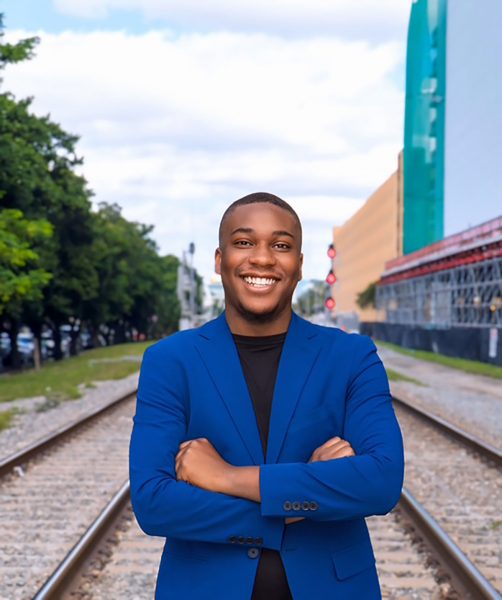
As an openly gay candidate running during Trump’s second administration, Manley said Congress must take a far more aggressive approach to protecting LGBTQ+ Americans, particularly as Republican-led states continue passing restrictions targeting transgender people.
“I think we need to bring the hammer down on some of these states. I’m not one of these states’ rights people — Congress has the power to preempt laws that states pass through the Supremacy Clause. There’s never been a more important time in our history when we’re seeing fascism, we’re seeing an administration out of control, and we need Congress to act.”
His campaign has also drawn criticism from both Republicans and establishment Democrats for his positions on Gaza, immigration, and his call to abolish U.S. Immigration and Customs Enforcement.
Manley said abolishing ICE does not mean eliminating immigration enforcement altogether.
“I’m not saying there should be no immigration laws. We want laws around immigration, but we want dignity. We don’t need a hypermilitarized, paramilitary group chasing people through the streets, terrorizing communities, churches, schools, and families.”
His personal experiences also inform his healthcare agenda.
“When we talk about healthcare, my experience growing up on Medicaid is seeing the failure of the government to expand Medicaid here in Florida, and now we’re seeing cuts from the Trump administration. I’m not just looking at statistics or numbers on paper — this is based on lived experience. I know how the people in this district are going to be hurt by these policies because I’ve lived it.”
California Democratic Congressman Ro Khanna, who has generated early buzz as a potential 2028 presidential contender for his “progressive capitalist” approach to governing, has endorsed Manley’s campaign, giving the first-time congressional candidate one of his highest-profile endorsements.
Manley faces six other Democrats in the primary, including U.S. Rep. Debbie Wasserman Schultz and former U.S. Rep. Sheila Cherfilus-McCormick, along with four Republican candidates in the general election field. Cherfilus-McCormick resigned from Congress ahead of a potential expulsion and is running again while facing federal criminal charges.
Despite running as the youngest candidate in the field, Manley said he hopes voters leave the race remembering one thing above all else.
“I want people to remember bold and authentic leadership. I want them to know I’m running because I’ve been through what people are going through right now — and it’s not that I’ve been through it, I’m actually still going through it. We need bold people who are going to fight for everybody and stand up for what’s right, and that’s what I hope voters see when they go to the polls.”
Egypt
Egyptian authorities refuse to allow gay cruise to dock in country
Scarlet Lady earlier this week blocked from visiting Turkey
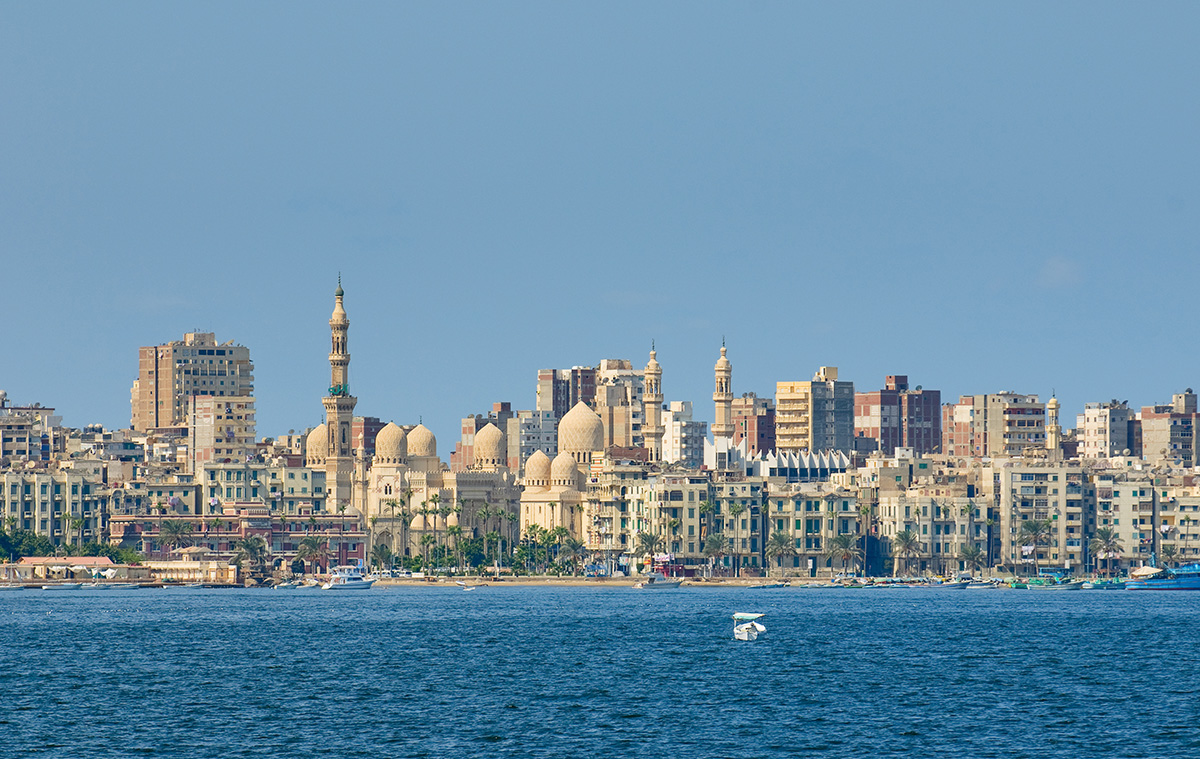
Egyptian authorities have refused to allow a gay cruise to dock in the country.
The Scarlet Lady, a Virgin Voyages ship that Atlantis Events chartered, was to have docked in Alexandria, a port city on the Mediterranean Sea. The Los Angeles Blade obtained a letter that Atlantis Events President Rich Campbell sent to passengers on Thursday, hours before the cruise was to have arrived.
“Early this morning, we were informed that Scarlet Lady has been denied entry into Egyptian waters and, as a result, will no longer be able to call in Alexandria today,” he wrote.
“I know how much this visit meant to so many of you,” added Campbell. “We successfully sailed a similar itinerary last year, so we were surprised by this unfortunate decision.”
Campbell noted “both the Atlantis and Virgin Voyages teams worked tirelessly to make this call in Alexandria a possibility.”
“This news came as a surprise to all of us, and we’re just as disappointed as you are,” he said.
The 10-day cruise left Athens on July 5. It is scheduled to end in Trieste, Italy, on July 15.
The ship had been scheduled to dock in Kusadasi, a Turkish resort town on the Aegean Sea, and Istanbul earlier this week. Turkish authorities refused to allow it in the country.
Former Tempe, Ariz., Mayor Neil Giuliano, who is an LGBTQ+ Victory Institute board member, is among those on the cruise.
“Just a few hours before arriving in Alexandria, Egypt — a city founded by and named for one of the ancient world’s best-known homosexuals — government authorities rescinded permission for our ship of 2,000 gay men to enter Egypt,” wrote Steve May, who is also on the ship, on Thursday in a Facebook post.
Alexander the Great founded Alexandria in 331 B.C.
“As with Turkey, we have been sent away not because of what we did, but because of who we said we are,” said May. “‘I am what I am’ is too much liberty for some to bear. So it was in the United States as well not long ago, where even I ended up as a convicted homosexual after a military trial in 2001 for saying ‘I am gay.’ This is just a reminder that for all the progress we have made, our freedom is never secure — for any of us, regardless of who or how we love. Back to Europe!”
Discrimination and persecution based on sexual orientation and gender identity is commonplace in Egypt. The Egyptian Football Association, along with the Football Federation Islamic Republic of Iran, objected to playing in the World Cup’s “Pride Match” that took place in Seattle on June 26.
Alabama
Former Fla. gubernatorial candidate Andrew Gillum arrested on drug charges
Democrat narrowly lost to DeSantis in 2018, later came out as bisexual
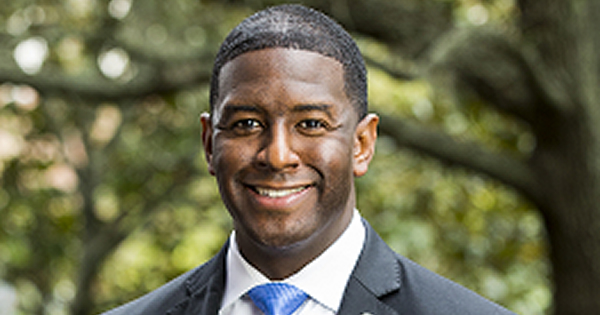
Andrew Gillum, the former Democratic nominee for governor of Florida and former mayor of Tallahassee, was arrested on drug possession charges in Alabama last week.
Police in Daphne, Ala., said they pulled Gillum over for erratic driving and found marijuana and methamphetamine in his vehicle. He was charged with possession of marijuana and unlawful possession of a controlled substance, according to the Daphne Police Department. Jail records show he was arrested on July 2 and released on July 3, the Associated Press reports.
Gillum, the first Black nominee of a major political party for governor in Florida, lost the 2018 election to current Republican Gov. Ron DeSantis in a highly contentious race.
Once considered a rising star in national politics, Gillum served in Tallahassee’s local government, first as a city commissioner and then as mayor of Florida’s capital from 2014- 2018.
The Daphne Police Department said officers stopped Gillum’s vehicle around 10:45 p.m. and initiated a probable cause search after one officer noticed a glass pipe on the center console.
During the search, officers found several rolled marijuana cigarettes and three packages containing a substance that tested positive for methamphetamine, police said.
The day after his arrest he was charged with possession of dangerous drugs, use or possession of drug paraphernalia, and possession of marijuana.
In 2020, Gillum was involved in a similar incident when he was found in a Miami Beach, Fla., hotel room with a man identified as an escort who had apparently overdosed on drugs. Police also found three bags of suspected crystal methamphetamine in the room. The man survived, and no one was ever charged with a crime.
Later that year, Gillum came out as bisexual during an appearance on “The Tamron Hall Show,” where he discussed his struggles with drug and alcohol addiction and his decision to seek treatment following the 2020 incident.
In the same interview he shed light onto this, saying his substance use was a byproduct of the emotional struggles he experienced after losing the 2018 gubernatorial race to DeSantis.
This is not the first time Gillum has faced legal scrutiny.
During his 2014 mayoral campaign, he faced allegations of misconduct after hiring private equity investor Adam Corey as his campaign treasurer, raising questions about a potential conflict of interest. However, the FBI ultimately concluded there was no conflict of interest.
The Netherlands
Dutch prime minister scheduled to open World Pride human rights conference
Rob Jetten is country’s first openly gay head of government
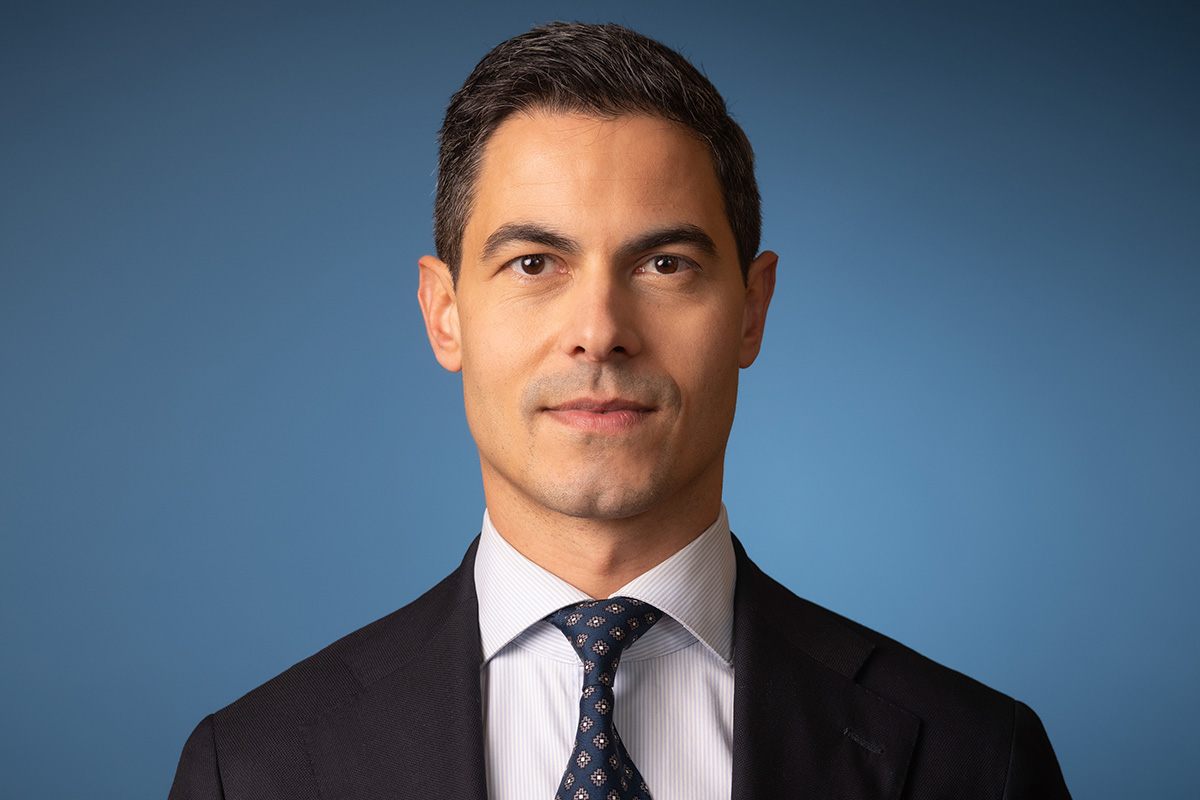
Dutch Prime Minister Rob Jetten is scheduled to open this year’s World Pride Human Rights Conference in Amsterdam.
Organizers in a July 1 press release said Jetten will open the conference on Aug. 5. Amsterdam Mayor Femke Halsema; South African Deputy Minister for Women, Youth, and People with Disabilities Steve Letsike; former Venezuelan National Assemblywoman Tamara Adrián; and Graeme Reid, the independent U.N. expert on LGBTQ+ and intersex issues, are among those who are also expected to participate in the gathering that will end on Aug. 7.
Jetten, 39, in February became the Netherlands’s first openly gay prime minister.
His centrist D66 party won the country’s elections last October. Geert Wilders’s far-right Party for Freedom narrowly lost.
Jetten took office after he formed a coalition government that includes the center-right Christian Democrats and the center-right People’s Party for Freedom and Democracy.
World Pride will take place in Amsterdam from July 25-Aug. 8.
Pennsylvania
Philadelphia murder suspect remains at large
Two killed, one injured in attacks motivated by victims’ sexual orientation
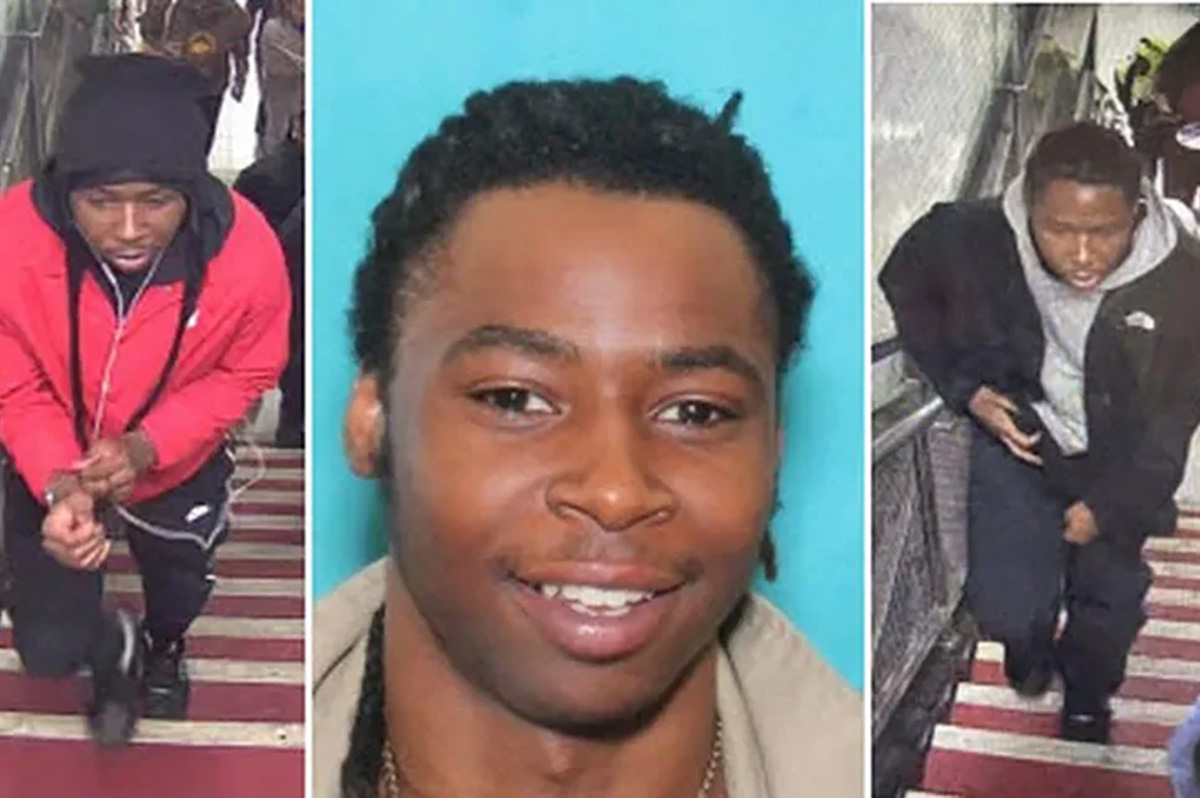
Police seek the public’s support in finding a suspect wanted in connection with three Philadelphia shootings, including two murders, who may have targeted his victims because they were gay. All three shootings took place near Hunting Park Recreation Center between May 29 and June 26.
The suspect is 21-year-old Jahylin Melchur, who has not been located by police and is not in police custody as of July 7. Police seek the public’s support in tracking down the suspect, whose image was captured on surveillance cameras. Previous reporting underlined that Melchur should be considered armed and dangerous.
Each of the victims was found partially clothed between 10 and 11 p.m.
On May 29, a 55-year-old in Juniata Park was found two miles from the rec center. The victim, who survived the encounter with critical injuries, said a man approached him and announced his intention to rob him, before shooting him in the elbow and torso.
Martin Higgins, 45, was pronounced dead on the bleachers of the rec center’s baseball field on June 20, suffering from a gunshot wound to the abdomen. Sharef Holman, 29, was found near the basketball courts on June 26, suffering from multiple gunshot wounds. He was transported to Temple University Hospital but died shortly thereafter.
Deputy Police Commissioner Frank Vanore declined to answer the Philadelphia Inquirer’s question regarding whether the victims may have met Melchur on a dating app, citing the ongoing investigation. Sources told the Philadelphia Inquirer that investigators are exploring this possibility
Although robbery may be at least part of the motive in the first shooting, other movies are unclear.
NBC10 reported that law enforcement sources told the station all three victims were targeted because they were gay, but the Philadelphia Police Department did not confirm this.
The Philadelphia Police Department replied to PGN’s questions with an email stating, “This remains a very active investigation, and investigators are looking at all aspects of the case, including underlying motivations for committing these crimes.
“At this point, we can confirm that Melchur is wanted for two homicides by shooting and one non-fatal shooting, all of which occurred in the Hunting Park area.
“The investigation has not established that the victims were specifically targeted because of their sexual orientation.”
The Philadelphia Police Department is urging anyone with information to contact the Homicide Unit at 215-686-3334 or submit an anonymous tip by calling the PPD Tip Line at 215-686-TIPS (8477).
(This story is republished with permission of the Philadelphia Gay News.)
Politics
Is America on the brink of a makeover?
PART 2: AHF’s Michael Weinstein on grassroots power and the pendulum swinging
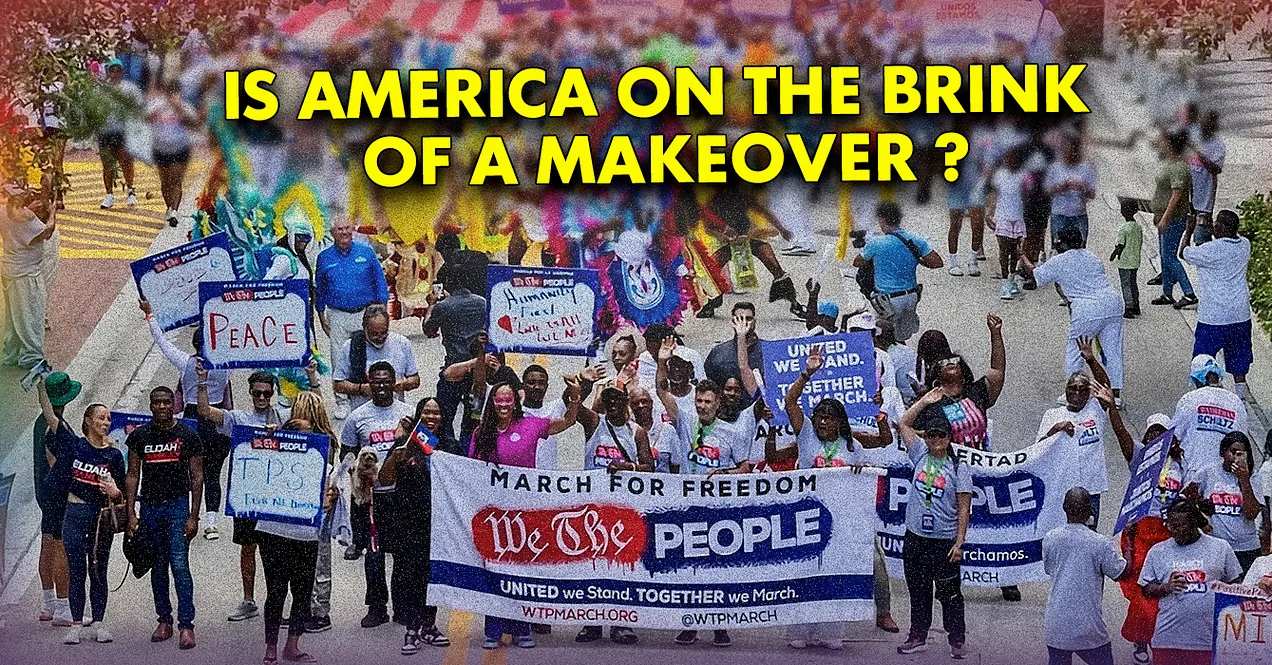
Count on “the people” to determine how they wanted to celebrate the 250th birthday of the United States of America during the July 4th weekend. For those not fixated on FIFA World Cup matches or Taylor Swift’s wedding to Travis Kelce or CNN’s Andy Cohen and Anderson Cooper getting drunk waiting for the ball to drop in Times Square marking the historic Independence Day, FOX News breathlessly covered poster-boy-for-pomposity Donald Trump as he took a massive South Dakota stage against the backdrop of Mount Rushmore, where he hopes to mount his own visage.
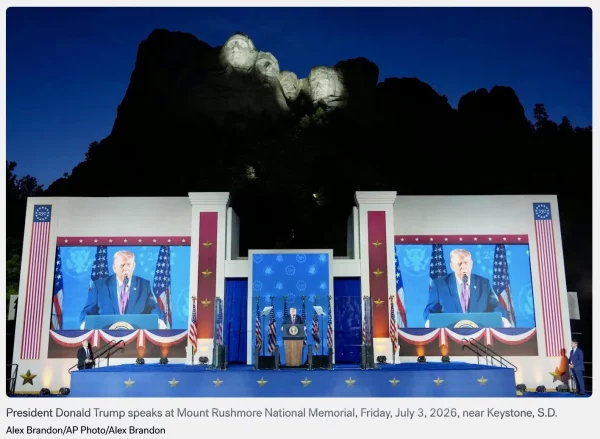
Mount Rushmore is internationally famous as the backdrop used by director Alfred Hitchcock in his 1958 film “North by Northwest.” One Hitchcock scholar described the acclaimed movie in which villain James Mason chases Cary Grant and Eva Marie Saint over recreations of the granite presidential faces as “a comic thriller about mistaken identity, political depravity, sexual blackmail, and ubiquitous role-playing.”
The weather also added drama for 4,800 fans who secured tickets through an online lottery. “A nearby lightning storm Friday afternoon pushed people indoors before the programming started, with hundreds cramming into the memorial’s cafeteria,” the South Dakota Searchlight reported. “Thunder, hail, and heavy rain continued for over an hour.”
After Trump’s speech, California-based Pyro Spectaculars, with a $700,000 contract, produced a fireworks show to The Village People’s gay anthem “YMCA.”
Trump evoked a hell storm of his own, warning about “a resurgence of the communist menace in our land,” resurrecting his Red and Lavender Scare closeted gay McCarthy era mentor, Roy Cohen.
“Communism is a mortal threat to American liberty,” Trump said, apparently alluding to the recent primary victories of Democratic socialist candidates. “It is the greatest threat to our country, including World War I, World War II, Pearl Harbor, or even 9/11.”
AP fact check: linking Democrats to communism is “inaccurate.”
Trump’s penchant for an “alternative facts” Orwellian spin that demands loyal acceptance of a lie suggests this is his new gauntlet for the midterms. “Communism is the exact opposite of life, liberty, and the pursuit of happiness,” he declared. “It’s death, tyranny, and the pursuit of evil.”
In his Mount Rushmore speech, Trump “was sharpening a line of attack that the White House has started to use to head off a newly insurgent progressive wing of the Democratic Party that appears to be resonating with liberal voters,” the New York Times reported. “He said the word ‘communism’ so many times, you might’ve thought the Cold War was still on.”
Trump also asserted that Republicans will “not lose an election for a hundred years” if they end the filibuster and pass the SAVE America Act, which would require anyone attempting to register to vote to prove U.S. citizenship and show identification at the polls. He wants to choose who votes, flipping the democratic principle of having voters choose their own leaders and representatives.

For America’s 250th birthday, Trump has shifted from talking about kings and dictators to comparing himself favorably to other American presidents, especially George Washington. As CNN noted in 2019, during an April 2018 tour of Washington’s home with French president Emmanuel Macron, Trump reportedly remarked on Mount Vernon and Washington: “If he was smart, he would’ve put his name on it. You’ve got to put your name on stuff, or no one remembers you.”
This Washington comparison is also familiar. “I don’t know if you knew it, but he actually ran his business simultaneously when he was president,” Trump said during an October Cabinet meeting. “George Washington was actually considered a very rich man at the time. … George Washington, they say, had two desks. He had a presidential desk and a business desk.”
Trump cited Washington again in his March 2025 State of the Union speech. “In fact, it has been stated by many that the first month of our presidency — it’s our presidency — is the most successful in the history of our nation. And what makes it even more impressive is that, do you know who No. 2 is? George Washington. How about that? I don’t know about that list. But we’ll take it.”
Experts disagree. On Feb. 18, 2024, Justin Vaughn and Brandon Rottinghaus said their Presidential Greatness Project poll ranked Trump last.
“Trump,” the scholars wrote in the Los Angeles Times, “maintains the position he held six years ago: dead last, trailing such historically calamitous chief executives as James Buchanan and Andrew Johnson. In that and other respects, Trump’s radical departure from political, institutional and legal norms….puts him behind not only Buchanan and Johnson but also such lowlights as Franklin Pierce, Warren Harding and William Henry Harrison, who died a mere 31 days after taking office.”

Given Trump’s tantrums over aerial photos showing low attendance for his big 250 State Fair address, one wonders if splashing his name and image on buildings, money, and other “beautification” projects, currently projected by Forbes to be roughly $162.5+ million – plus the “vanity” $1.4+ billion ballroom – might be his middle finger to critics. Might his ultimate goal be replacing Washington DC’s name with his own?
Trump raked in a $2 billion haul last year, according to a 927-page financial disclosure report showing how he and his family “reaped huge financial rewards in 2025 through his money-losing Trump Media venture and a separate cryptocurrency firm called World Liberty Financial, even as routine investors suffered vast losses,” the New York Times reported July 1. “He also amassed hundreds of millions through deals that involved foreign governments or corporations with agenda items pending before the Trump administration.”
Meanwhile, the federal government debt as of July 5 is $39.46 trillion or $115,625 per American, according to the Peter G. Peterson Foundation.
Washington warned about potential despots like Trump. Sarah Pruitt’s 2020 analysis of Washington’s Farewell Address, the first version of which was written by his friend and protégé Alexander Hamilton, concludes that the retiring president focused on three themes: 1) the Importance of unity; 2) The ‘Worst Enemy’ of Government: Loyalty to Party Over Nation; 3) Danger of Foreign Entanglements.
Shirking the nation’s common interest could engender a “spirit of revenge” and prompt the rise of “cunning, ambitious, and unprincipled men” who would “usurp for themselves the reins of government; destroying afterward the very engines, which have lifted them to unjust dominion,” Washington cautioned.
The Constitution’s system of checks and balances and separation of powers prevented despots or groups from taking control of the government. And the system also allowed for change through laws or constitutional amendments rather than by force.
Washington urged unity above all. “The name of American, which belongs to you in your national capacity, must always exalt the just pride of patriotism more than any appellation derived from local discriminations,” he wrote. “You have in a common cause fought and triumphed together; the independence and liberty you possess are the work of joint counsels, and joint efforts of common dangers, sufferings, and successes.”
In their survey, the presidential scholars said their assessments “are driven not only by traditional notions of greatness but also by the evolving values of our time.”
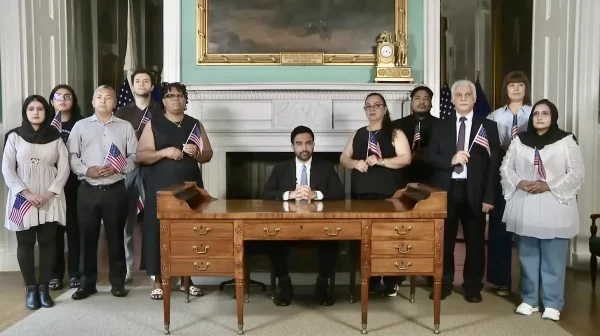
That emphasis on common interests and shared values was represented on July 3 by New York City Mayor Zohran Kwame Mamdani, an inspirational Democratic Socialist, who delivered remarks commemorating America’s 250th Fourth of July birthday while sitting at George Washington’s desk, surrounded by recently naturalized American citizens.
“Two hundred and fifty years presents a rare opportunity for more than 340 million people to turn together — both towards one another and towards ourselves, to take measure of who we are as a nation. When we look at America, what do we see?” he asked.
“The truth, my friends, is that America is exceptional because here, nothing is fixed into place. The frontier may be closed, we may have walked on the moon, but the work of fulfilling the values first enshrined in the Declaration of Independence — that work endures, my friends, and it belongs to us all. It belongs, too, to our newest Americans, those standing here with me today,” Mamdani said.
“Patriotism has never been about pretending our nation is without flaws,” he said. “Patriotism is every act of righteous dissent, it is every march led under the heavy sun, it is every protest held a decade before its time. It is precisely because we love this nation that we will not leave it. After all, who loves America more than those who have sacrificed so much to make it free?”
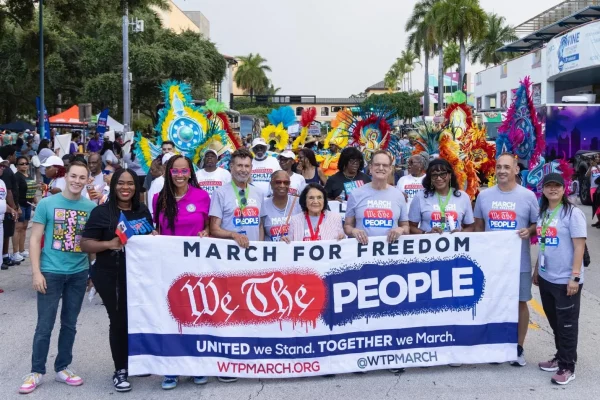
The real celebrations of America’s 250 anniversary came from regular grassroots folks like the thousands organized by AIDS Healthcare Foundation and representatives from 50 coalitions for their “We the People March for Freedom” in Fort Lauderdale, Florida on July 3. Gov. Ron DeSantis missed the patriotism. He was at Mount Rushmore with Trump.
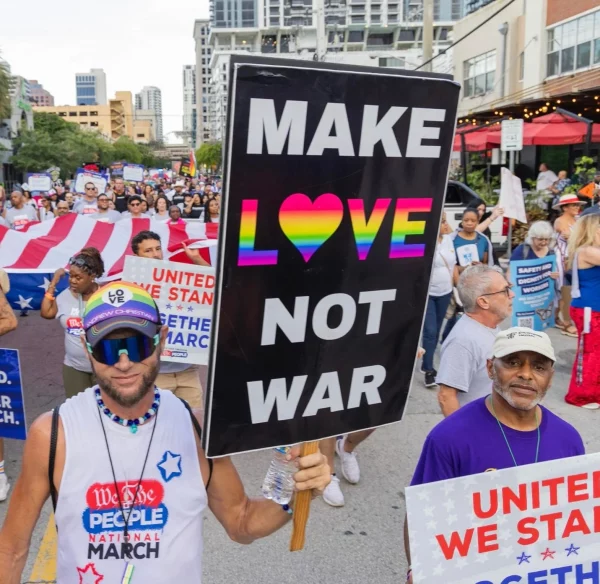
The marchers were encouraged to bring signs with messages about issues that matter to them, such as the war in Iran, affordability, which Trump called a “hoax,” and housing, which he calls “a yawn”.
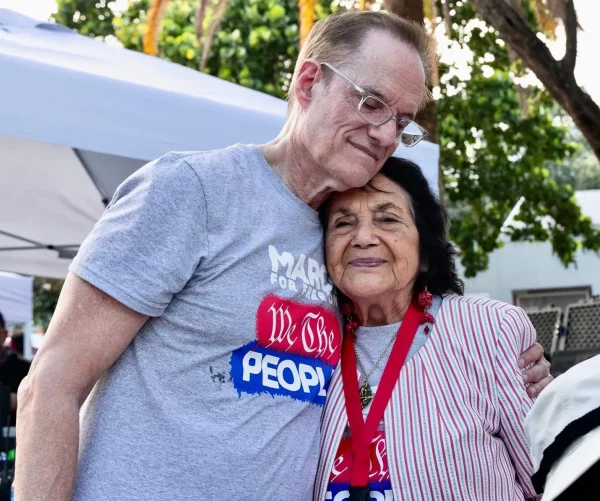
Longtime AHF friend, labor leader and activist Dolores Huerta, Haitian American activist Santra Denis, Healthcare advocate Alecia Tramel-McIntyre, Gen Z activist Maxx Fenning, and AHF President/CEO Michael Weinstein all participated in a rally and marched through downtown Fort Lauderdale, culminating in another event with a powerful musical performance by award-winning gospel artist Erica Campbell.
Florida is of particular importance to AHF and other HIV/AIDS activists. Recently, AHF and coalition members won a strong pressure campaign against the state, requiring DeSantis to restore ADAP funding to his state budget, though other serious issues remain.
“This victory belongs to our whole coalition, the clinicians, providers, and people living with HIV who told their stories at real personal cost,” Esteban Wood, Director of Advocacy and Legislative Affairs at AHF, said in a press release. “We led this fight together. For months, it was a promise. Today it is the law, and people can finally breathe.”
In a recent hour-long Zoom conversation, Michael Weinstein and I talked about Trump’s obsession with communism; Michael’s long association with Democratic Socialist Sen. Bernie Sanders; how the issue of income equality crosses all lines; opposition to corporate politics expressed by young Democratic Socialists; and comparing the possibility of their influence and pull to the pull the Tea Party had on the Republican Party.
Michael also gives his take on the political scene and disapproval of Trump – in Part 1, along with strong comments on Gaza, immigration, race, and Texas political star James Talarico.
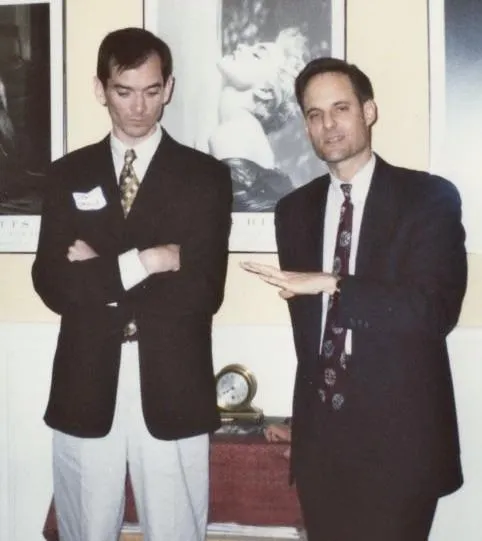
In Part 2 of our interview here, Michael and I talked more about politics, HIV/AIDS, and AHF. I’ve been covering AHF since the late 1980s, when the nonprofit was AIDS Hospice Foundation While AHF is now a global $3 billion healthcare organization with 10,000 employees (for which they won a Forbes Award as one of America’s Best Large Employers, #98), Michael’s through-line from the Lavender Left until now is his deep commitment to helping those in need. At the end of our conversation/interview on the cusp of this historic moment, I asked him what freedom and independence meant to him.
MW: “Well, on a personal level, it means being able to be all of who I am – a senior, a gay man who’s married to another man, a history thinker. I’m an activist on a societal level.
I still get goosebumps when I drive by the Capitol, when I see the Lincoln Memorial. When I reflect on so many American heroes.
We are very imperfect, right? But that’s humanity. We have a choice between the angels of our nature and the sub-basement of our nature. It’s up to us individually and collectively to bring out the best in us.
And I have found the individual protests, which I usually go to in my neighborhood. I don’t go to the one downtown. I go to the one in Hollywood – and seeing that mix of people with their homemade signs and seeing the people honking and all that – it’s a tonic.
Sometimes I argue with my family members who are… I describe them as: left, very left, and extremely left – more or less. It’s my extended family, too, [with] a couple of conservatives thrown in there, but not much. We don’t have to worry about arguing at family gatherings. But sometimes I have to say to them, ‘I like living in the California bubble’….
So, it’s all about keeping the promise, right? The promise isn’t fulfilled. But it’s about aspiring to keep the promise.
And if I just reflect on LGBTQ and AIDS issues, America stepped up to bring treatment to the world. Nobody else did that, besides us.
When I think about the movement for LGBTQ rights, we were the spearhead of that.
I think about the Women’s Movement. I think about the Civil Rights Movement – we’ve both lagged behind but also been the tip of the spear.
And so, I’m American, through and through. And I’m an Angeleno. This is my fate, for better or worse. I’m gonna make the best of it….
Sometimes when I’m talking to progressive people, I have to say, ‘I have a simple definition of being a progressive: I want to help the most people in need with the things they need the most.’
I think part of my evolution from being a far lefty to where I am now is – it was a point at which I gave up on ideology. I said – that is not the answer. The answer is how to help….
This is so extreme [now]. I mean, this makes the Pharaohs and the Gilded Age look like child’s play. It’s not sustainable. It’s not going to continue this way. It can’t continue. You can’t have this many people so disenfranchised. It will change. The pendulum does swing.
And it will.”
Watch the full interview with Michael Weinstein.
This is a cross-post from Karen’s LGBTQ+ Freedom Fighters Substack.
National
Madonna roundup: Reviews, sales, and love for ‘Danceteria’
Pop legend’s new album ‘Confessions II’ earning raves

Madonna isn’t just back, she’s ubiquitous.
From a Times Square takeover to Graham Norton’s couch, the pop legend is busy promoting her new album, “Confessions II,” a sequel to 2005’s “Confessions on a Dance Floor,” that is earning rave reviews.
“Madonna’s back in peak form with a fresh and honest dance record that’s not only her best in 20 years, but a genuinely vital addition to her canon,” says Pitchfork.
“Facing grief and loss has made Madonna’s music deeper than it’s been in 20 years, but also more alive,” the Guardian proclaims.
“If everyone in the club is a work of art, as ‘Danceteria’ says, then to live loudly is to make an indelible mark,” according to Vulture.
The album features upbeat dance productions along with some melancholic views on death and loss. On the song “Betrayal,” she reflects on the recent death of her stepmother Joan, singing, “You’ll never take my mother’s place … you betrayed me, you enslaved me.”
On “L.E.S. Girl,” she revisits her early days living on the Lower East Side and struggling to pay the rent. “Bizarre” seems to reference her failed 1980s marriage to actor Sean Penn. “Test” is a duet with daughter Lola Leon, in which she sings, “I wish I knew / The pain I’ve caused / My butterfly / Was always being watched.”
But the emotional high point of the album comes on “Fragile,” which she wrote about the death of her brother Christopher. The two were close early in Madonna’s career and he designed sets for early tours, including “Blonde Ambition.” But they had a falling out after her marriage to Guy Ritchie and he wrote a scathing tell-all book about his sister that led to years of estrangement. The two reconciled after Christopher’s cancer diagnosis and shortly before he died in 2024 at age 63. She sings, “Late last night I was fast asleep/You came to me in a dream/You said, ‘Don’t forget about me/Don’t forget to be happy.’”
Death emerges again but in a much more upbeat context in “Danceteria,” an ode to the iconic New York nightclub that has emerged as a gay favorite single and seems destined to be the song of the summer in queer nightlife. She recounts her pre-fame days trying to convince a DJ to play her first single “Everybody” at the club and name checks Jean-Michel Basquiat, Keith Haring, best friend Debi Mazar, and DJ Mark Kamins on the track.
Streaming numbers and sales are strong for the new album with projected first week sales of 100,000 ensuring a No.1 debut in the U.S.
U.S. Federal Courts
Three overlooked court rulings limited White House anti-trans policies
Supreme Court narrowed trans rights, advocates saw victories in other decisions.

While the U.S. Supreme Court’s decision in West Virginia v. B.P.J. continues to dominate headlines about transgender rights, three recent federal court cases produced significant rulings that limited or temporarily blocked Trump-Vance administration policies attacking trans Americans.
Talbott v. USA
Trump issued Executive Order 14183, “Prioritizing Military Excellence and Readiness,” on Jan. 27, 2025, banning trans people from serving in the military. The following day, GLAD Law and the National Center for LGBTQ Rights filed a federal lawsuit in the U.S. District Court for the District of Columbia challenging the ban on behalf of six active-duty service members and two individuals seeking to enlist. The organizations argue the policy violates the Fifth Amendment’s guarantee of equal protection under the law.
The plaintiffs sought a nationwide preliminary injunction — a temporary block on enforcement of the executive order while the litigation continued. The district court granted that injunction and later rejected the Trump-Vance administration’s request to dissolve it, temporarily protecting trans service members from being discharged solely because of their gender identity.
That protection, however, was short-lived. In Shilling v. Trump, the Supreme Court stayed the lower court’s injunction, allowing the military to begin enforcing the trans service ban while litigation continued. The U.S. Air Force subsequently required trans service members facing involuntary separation proceedings to appear in uniforms and grooming standards corresponding to their sex assigned at birth and, in some cases, used their deadnames during those proceedings.
Despite that setback, the plaintiffs secured two significant legal victories during Pride month.
On June 1, a federal appeals court blocked the discharge of the trans service members involved in Talbott. Then, on June 30, a federal district court certified the case as a class action on behalf of all currently serving trans service members. That means future rulings in the case will apply not only to the original six plaintiffs but to all active-duty trans military personnel covered by the class.
The case remains ongoing, but class certification significantly strengthens the ability to protect trans service members as the litigation continues. Currently, there are 28 plaintiffs in total, including the two still attempting to enlist.
Z.A. v. Blanche
In Z.A. v. Blanche (formerly Z.A. v. Lucile Salter Packard Children’s Hospital at Stanford), the U.S. District Court for the Northern District of California issued an emergency order one day before a federal grand jury subpoena was set to be enforced on July 2. The order blocked the Department of Justice from obtaining confidential medical records belonging to California families whose children receive gender-affirming care.
The ruling relied in part on protections established under the Health Insurance Portability and Accountability Act (HIPAA), the 1996 federal law governing the privacy and security of medical records.
The decision represented a significant check on the administration’s efforts to obtain sensitive patient information, protecting the privacy of trans patients and their families while the legal challenge proceeds.
Doe v. Blanche
Doe v. Blanche, which remains ongoing, challenges Trump’s executive order, Defending Women From Gender Ideology Extremism and Restoring Biological Truth to the Federal Government. Under policies implementing that order, many trans women in federal custody would be housed in men’s prisons.
A federal district court in D.C. granted a preliminary injunction blocking enforcement of a Bureau of Prisons policy that would require incarcerated trans women to be housed in men’s facilities regardless of individualized safety assessments or the risk of sexual assault.
The Bureau of Prisons policy also conflicts with the goals of the Prison Rape Elimination Act (PREA), enacted by Congress in 2003 to address sexual abuse in correctional facilities through standards, research, funding, and prevention measures. Federal data has consistently shown that trans people in custody experience sexual assault at dramatically higher rates than the general prison population.
Turkey
Turkish authorities refuse to allow gay cruise to dock in country
Atlantis Events-chartered ship included stops in Kusadasi, Istanbul

Update: Egyptian authorities on Wednesday blocked the ship from docking in Alexandria, a port city on the Mediterranean.
Turkish authorities have refused to allow a gay cruise to dock in the country.
The Scarlet Lady, a Virgin Voyages ship that Atlantis Events chartered, departed Athens on Sunday. The 10-day cruise is scheduled to end in Trieste, Italy, on July 15.
The ship had been scheduled to dock in Kusadasi, a Turkish resort town on the Aegean Sea, on Tuesday. It was then slated to sail to Istanbul on Wednesday.
Officials in Aydin Province in which Kusadasi is located on June 28 posted a statement on X that confirmed the decision not to allow the Scarlet Lady to dock in Turkey.
Authorities noted the “groups” behind the cruise are “known for behaviors that do not align with the structure of our society and our moral values.” The June 28 statement also says the scheduled docking “caused great discomfort in various segments of our society.”
BASIN AÇIKLAMASI
Basın yayın organları ve sosyal medya platformlarında gündeme gelen, toplumumuzun yapısıyla ve ahlaki değerlerimizle örtüşmeyen davranışlarıyla bilinen gruplarca kiralanan bir kruvaziyer gemisinin 7 Temmuz 2026 tarihinde Aydın Kuşadası Limanınına planlamış… pic.twitter.com/MHqN0NoXHI
— T.C. Aydın Valiliği (@AydinValiligi) June 28, 2026
Atlantis Events in a statement on its website said the company has “been informed by the Turkish authorities that Atlantis will not be permitted to dock in Kusadasi or Istanbul during this voyage.”
“As a result, we have had to alter our sailing itinerary somewhat,” it reads.
The statement notes the cruise will now stop in Alexandria, Egypt, and Crete.
“Both ports have excellent opportunities for exploration and enjoyment and have been favorites of ours for years,” it reads.
(Discrimination and persecution based on sexual orientation and gender identity is commonplace in Egypt. The Egyptian Football Association, along with the Football Federation Islamic Republic of Iran, objected to playing in the World Cup’s “Pride Match” that took place in Seattle on June 26.)

Patti LuPone, who is performing on the cruise, sharply criticized the Turkish government over its decision.
“The Atlantis cruise I am performing on next week, has been banned from entering Turkey,” she said on her Facebook page on July 2. “A ship — a magnificent ship — full of well-heeled gay men. And me. Denied entry to Turkey simply because of who is on board. I am furious, but I am sailing, as the ship will make other ports of call. I am ready to perform for all the wonderful men on this Atlantis cruise, who deserve so much better than this.”
Atlantis Events CEO Rich Campbell told the Washington Post that his company’s cruises have visited Turkey more than a dozen times over the last two decades.
“We’re there to shop, be great tourists, spend money,” he said. “It’s always a culturally respectful group.”
Campbell further noted Turkey could lose at least $1 million in tourism revenue over its decision.
“The bigger damage to Turkey is when you start picking and choosing who’s allowed to enter, and your economy depends on tourism, you’re creating a standoff between tourists and yourself,” he told the Post. “And you run the risk of alienating a lot of potential tourists.”
The Los Angeles Blade on Monday reached out to Campbell for additional comment.
Commentary
When a church fears the rainbow
Puerto Rico pastor objected to Pride symbols outside congregation
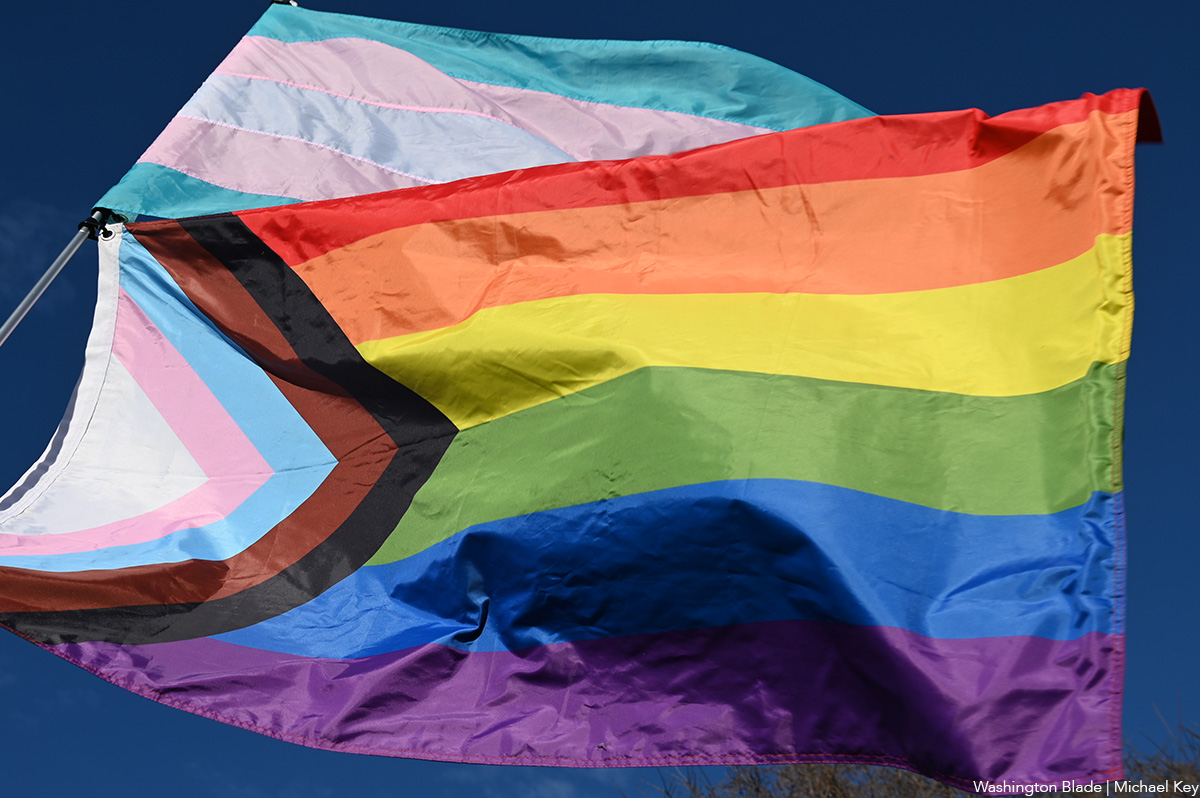
There are moments when an incident stops being merely a local story and begins to reveal something much deeper. What happened on June 28 outside One Church, in Comerío, Puerto Rico, belongs in that category.
I do not know who painted the rainbow colors on the asphalt and on a roadside guardrail. I do not know what motivated them, and it is not my place to justify their actions. If someone believes a law was broken, there are authorities and legal mechanisms to address that. That is not the point of this reflection.
The point is the words that followed.
Hours after those colors appeared, Pastor Jorge J. Santiago Reyes went live on social media. He said he felt threatened. He described what happened as a physical attack against his church. He appeared angry and disappointed. He called those who painted the rainbow “cowards” and “charlatans.” He expressed frustration with the support that, according to him, the municipal government of Comerío has shown toward the LGBTQ+ community, and with those who support posts related to that community. He repeated several times that the people responsible had “crossed the line.” He ended his message by saying, “These charlatans have to be stopped.”
As I listened to his words, I stopped thinking about the paint.
I began thinking about fear.
There is one phrase the pastor repeated again and again: “They crossed the line.” Yet he never explained what that line was. If he was referring to a possible violation of the law, that is for the authorities to determine. If he meant respect for property, there are also procedures to deal with that. But when that line remains undefined and the message begins to associate a rainbow with a threat, the question changes. It is no longer only about a guardrail or a road. It becomes a question about what boundary, in the pastor’s view, was actually crossed.
Paint can be erased.
A brush can cover the asphalt and return a guardrail to its original color.
What does not disappear so easily is the meaning of those colors.
And perhaps that is where the real conflict begins.
It is significant that this happened precisely on June 28, the day when the LGBTQ+ community remembers a history marked by exclusion, violence, and the struggle for dignity. What represents memory, hope, and the possibility of living without hiding for millions of people was presented by others as a threat.
I do not know why someone painted that rainbow. I do not need to know in order to ask whether those were the words society should expect from a pastor.
A religious leader may feel hurt, frustrated, or angry. What he cannot forget is the responsibility that comes with every public expression. His words do not end when a livestream ends. They move beyond the space of his church, reach people who may never share his faith, and help shape the way others see those who think differently. When a pastor calls other people “charlatans” and “cowards,” says they “have to be stopped,” and turns a rainbow into evidence of an attack, he is no longer speaking only from frustration. He begins to build a discourse that can feed rejection toward a community far larger than the people responsible for that act.
There was another moment in the livestream that caught my attention. The pastor reminded viewers how much he has served Comerío, how much he has accompanied his community, and how much he has worked for it. I have no reason to question that service. I am sure many people can testify to the good he has done.
That is precisely why it was difficult to hear.
Pastoral vocation is not about reminding a town of everything one has done for it when conflict appears. Service does not lose its value when it goes unrecognized; it loses something when it becomes an argument to claim a moral position from which to speak down to others. A person who serves does so because that is the nature of the calling, not because that service grants authority to discredit those who think differently.
As a pastor, that part of the message left me deeply uneasy. Not because I expect ministers of God to be perfect. We are not. But because our words carry weight, we are called to speak with greater responsibility. Some expressions build bridges. Others raise walls. Some words invite encounter. Others end up justifying rejection.
The paint will disappear. A brush will be enough to cover the asphalt and return the guardrail to its original color.
The words will not disappear as easily.
They will remain recorded in a video, shared again and again on social media, and remembered by those who heard them. They will remain long after the last trace of paint has been erased.
When this episode is remembered, it probably will not be because of the rainbow that appeared outside One Church, in Comerío, Puerto Rico.
It will be because of the words a pastor chose to use when speaking about it.
And that difference changes everything.

Are we cruising or creepy?

The Queer Film Collective makes your favorite movies possible

Gay Fla. Democrat Elijah Manley sees opportunity in Trump’s second term

Egyptian authorities refuse to allow gay cruise to dock in country

‘She’s the He’ brings gender-bending twist to teen comedy genre

Madonna roundup: Reviews, sales, and love for ‘Danceteria’

Three overlooked court rulings limited White House anti-trans policies

Weho’s Prince Joshua tells all in his new album, ‘Prince of the BLVD’

SunCienega Success Lab launches to empower local entrepreneurs with free resources

Queer media dominates the 2026 Emmy nominations
-
 National5 days ago
Madonna roundup: Reviews, sales, and love for ‘Danceteria’
-
 U.S. Federal Courts5 days ago
Three overlooked court rulings limited White House anti-trans policies
-
 Music & Concerts4 days ago
Weho’s Prince Joshua tells all in his new album, ‘Prince of the BLVD’
-
 Business5 days ago
SunCienega Success Lab launches to empower local entrepreneurs with free resources
-
 EMMYS3 days ago
Queer media dominates the 2026 Emmy nominations
-

 Celebrity News5 days ago
Silky Nutmeg Ganache talks sex and dating, gender, politics, weight loss journey
-
 The Netherlands4 days ago
Dutch prime minister scheduled to open World Pride human rights conference
-
 Egypt3 days ago
Egyptian authorities refuse to allow gay cruise to dock in country
-

 Politics4 days ago
Is America on the brink of a makeover?
-

 Pennsylvania4 days ago
Philadelphia murder suspect remains at large